
By Sergiu Klainerman (Higgins professor of mathematics at Princeton), Heterodox STEM, Substack
The scientific enterprise in United States is being seriously challenged by powerful anti-scientific trends. Postmodern relativism, under the pretense of anti-racism, anti-sexism, anti-colonialism, anti-ableism... is undermining the very foundations of science as a search for truth.

by Kevin DeYoung, PrincetoniansForFreeSpeech.org
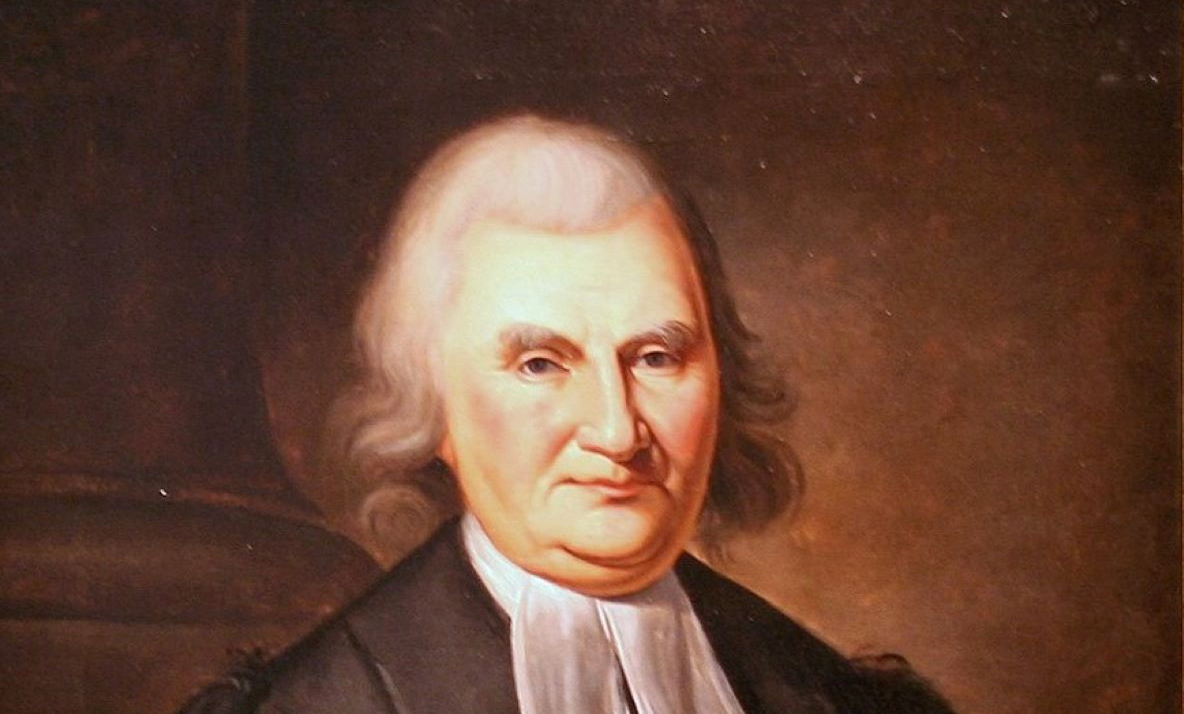
As of the online publication of this essay, Princeton University is still deciding what to do with Witherspoon...

The rapid expansion of funding for “civics institutes,” along with the spreading of state mandates that civics be taught as a core subject in colleges, has ignited much controversy. Debates focus on whether civics should be prioritized above other vital subjects, whether civics education should be concentrated in autonomous centers on campus, and whether states should dictate how it should be taught.
Ironically, the impetus to make civics a discipline came from progressive scholars nearly 20 years ago, not the conservatives now founding civics institutes across the country.

Jan-Werner Müller, renowned scholar of democratic theory and the history of political thought, was named Class of 1943 University Professor of Politics. Professor Müller is the founding director for the Academic Freedom Initiative and Forum for the History of Political Thought, which bring scholars together to examine academic freedom and the development of political ideas, respectively. Princeton endows 25 University professorships, which are the highest honor for faculty at the University.

Princeton faces many domestic threats. In 2024, a Forbes College dryer burst into flames, setting off fire alarms and forcing students to evacuate the residential college. Last year, residents of Yeh College and New College West were plagued by droves of mice in dorm rooms when they returned from winter break. Still, despite the formidable challenges these campus snafus represent, the threat these mishaps pose to the University pales in comparison to recent polemics against Princeton’s humanities education.
In an October podcast episode with The Free Press, Shilo Brooks, a former Princeton lecturer and executive director of the James Madison Program, painted a grim picture of the state of humanities education at Princeton. But Brooks’ issues with the humanities at Princeton are completely unfounded — a simple rebuttal lies in students’ level of passionate and sincere engagement with the humanities.
Josh Moody
Inside Higher Ed
Excerpt: House Republicans have accused George Mason University president Gregory Washington of lying to Congress about diversity practices at his institution, ratcheting up pressure on the president to step down.
Washington has denied breaking the law through efforts to diversify GMU’s faculty and staff, telling Congress that the university did not practice illegal discrimination under his leadership.
Eric Kelderman
Chronicle of Higher Education
Excerpt: With federal funding as its leverage, the Trump administration has mounted a sustained campaign to give the federal government greater oversight of higher education. By a wide margin, the public rejects that effort — including the White House’s most recent foray, its proposed “compact” for higher education.
Surina Venkat
The Hill
Excerpt: The nation’s top schools have ramped up their spending on lobbying the federal government this year amid President Trump’s crackdown on higher education, disclosures filed last week show.
Twenty-four top universities and one of the nation’s largest college systems have already spent around $24 million lobbying Washington this year, more than double what they spent during the same time period last year, according to federal disclosures.
Jessica Blake
Inside Higher Ed
Excerpt: All the pieces of House Republicans’ plan to cut trillions in federal spending are now public, and if the package becomes law, colleges and universities could face crippling repercussions, higher education experts say.
“It is a full-out assault on the ability of students—especially low-income students—to access and afford higher education,” said Jon Fansmith, senior vice president for government relations and national engagement at the American Council on Education. “It will have a dramatically negative impact, not just on higher ed, but on the whole population.”
Josh Moody
Inside Higher Ed
Excerpt: With the Trump administration taking special aim at higher education, conservative policymakers and college leaders are embracing the opportunity to force a cultural reset across academe.
At a forum Tuesday morning called “Reclaiming the Culture of American Higher Education,” the architects of Project 2025, an official from the U.S. Department of Education and four college presidents cast the sector as ripe for reform. The event offered insights into how conservative thinkers operating the levers of power at the Education Department view the current state of higher education and the need for change.
Maya Stahl
Chronicle of Higher Education
Excerpt: The Trump administration is demanding that Harvard University eliminate all diversity, equity, and inclusion programs, reform admissions and hiring practices, and crack down on student discipline “to remain a responsible recipient of federal taxpayer dollars.”
Why Evolution is True
Jerry Coyne
Excerpt: The time has come that many have feared but many will celebrate: DEI (“diversity, equity, and inclusion”) is effectively gone from campuses by federal order.
Since virtually every institution of higher learning depends on some federal funding, this gives colleges the choices of abandoning DEI or abandoning federal money. You know which they’ll prefer. The former, of course, but they’ll try to have both, sometimes by duplicitous practices.

There is a particular kind of bad idea that thrives under the protection of academic freedom. Such a toxic philosophy does not contribute to the marketplace of ideas. Rather, it gains prominence within the academy precisely because it systematically poisons that marketplace from within. When it comes under attack from outside university gates, campus administrators invoke free inquiry and end up defending it as precisely the kind of controversial matter academics must be free to explore; professors assign it as cutting-edge gospel; students come to think of it as precisely what they’re attending college to absorb.
Third Worldism is such an idea. Though it is not campus-grown like critical theory, it has found the American university to be an almost perfect habitat.

The Trump administration is expanding its efforts to dismantle the Education Department by moving its oversight of school safety grants and foreign funding for universities to other agencies, the administration announced Monday.
The Department of Health and Human Services is slated to take over work related to school shootings and student mental health programs. The State Department will be tasked to help the Education Department manage how the federal government monitors the flow of billions of dollars in foreign gifts and contracts to higher education institutions.

The Department of Justice filed a new lawsuit against Harvard University, accusing it of failing to hand over documents and comply with a federal investigation into alleged racial discrimination in its admissions process, in the latest escalation of Donald Trump’s long-running legal pursuit of the nation’s oldest university.
Harvard stressed in a statement that it was responding to inquiries “in good faith” and prepared to engage “according to the process required by law”.

Education Secretary Linda McMahon told a conservative news outlet she wants to focus less on higher ed this year. The comment comes after the Trump administration’s yearlong use of multiple federal departments to pressure universities and their employees and students to conform to the White House’s desires.
McMahon discussed her 2026 priorities in an interview with Breitbart before Christmas. As the outlet put it, “McMahon said the new year is a chance to shift a little bit away from higher education and focus on elementary and secondary.”
Click here for link to full article
Dhruv T. Patel, Avani B. Rai, and Saketh Sundar, Crimson Staff Writers
Harvard Crimson
Excerpt: A federal judge ruled that the Trump administration violated the Constitution when it froze more than $2.6 billion in research funding to Harvard, striking down the freeze in its entirety and delivering the University a major legal victory.
The decision from United States District Judge Allison D. Burroughs hands Harvard a summary judgment win on core constitutional grounds, finding that the administration’s freeze orders were retaliation for protected speech. She also found that the government failed to comply with Title VI of the 1964 Civil Rights Act, which requires agencies to give notice, investigation, and an opportunity to respond before terminating federal financial assistance over civil rights violations.
Cam N. Srivastava
Harvard Crimson
Excerpt: Harvard College Dean David J. Deming told students that the College can no longer host programming targeted at specific races or identity groups during a presentation to Peer Advising Fellows last week — telling attendees he assumed they already understood why the change was necessary.
Samuel A. Church and Cam N. Srivastava
Harvard Crimson
Excerpt: Harvard College will close its offices for minority students, LGBTQ students, and women and fold their staff and programs into a new center within the Office of Culture and Community, according to a Wednesday message from College Dean David J. Deming.
In place of the three centers, the College will establish the “Harvard Foundation” within the recently-formed OCC, under the College’s Dean of Students Office. Current staff from the Harvard College Women’s Center, Office for BGLTQ Student Life, and Foundation for Intercultural and Race Relations will be reassigned to the Foundation. Roughly 50 employees worked at the three offices, including more than 15 student interns, according to archived versions of their websites.
Jessica Blake
Inside Higher Ed
Excerpt: One of President Donald Trump’s latest executive orders aims to end “illegal” diversity, equity and inclusion policies and could upend programs that support underrepresented groups on college campuses.
Whether the order, signed late Tuesday night, will be effective is not clear, some experts cautioned Wednesday. Others celebrated it as the end of DEI in America.
Dear ACTA friend,
Since its founding, the American Council of Trustees and Alumni (ACTA) has advocated for strengthening civic education at America’s colleges and universities. Our democratic republic depends on an educated citizenry—the rising generation must have a robust understanding of our nation’s history and system of government.
Our country is facing a civic knowledge crisis, and with it, a crisis of civic order. ACTA’s recent survey, Losing America’s Memory 2.0, has brought to light some startling findings about the state of civic literacy among college students. Most students are unable to identify the speaker of the House of Representatives, term lengths for members of Congress, or the branch of government with the power to declare war.

Abigail Saguy, a professor of sociology at the University of California at Los Angeles, was a little bit nervous to teach a course called “Sociology of Gender” again. She’d last done so in 2019, and found the atmosphere increasingly combative, saying student activists in her course had attempted to “police” her readings and word choice. So in 2024 she tried something new: She got students to debate each other virtually.

In 2023, FIRE raised the following question: What’s going on in Florida? In light of recent affronts to academic freedom in the Sunshine State, we regret to raise this question once again.

A recent article in the Chronicle of Higher Education describes the current trend on college campuses of starting “civil dialogue” programs. These programs are designed to help students engage with diverse ideas in more constructive ways. This effort is commendable but the question is: Will these programs work?
Even as campuses embrace civil dialogue, there is a danger that some university leaders are quietly redefining “open inquiry.” And they are doing so in a way that makes campus dialogue more narrow and less intellectually demanding than it ought to be.
Emma Whitford
Inside Higher Ed
The University of Oklahoma put a lecturer on administrative leave last week for allegedly exercising “viewpoint discrimination” five days after a different instructor was placed on leave for alleged religious discrimination.
Kelli Alvarez, an assistant teaching professor focused on race and ethnicity in literature and film, allegedly encouraged students to miss her English composition class to attend a protest in support of Mel Curth, a graduate teaching assistant in the psychology department who was removed from teaching after a student filed a religious discrimination complaint against her. Alvarez said she would excuse the absences of students who attended the protest. But according to university officials, she did not extend the same offer to students who intended to miss class that day to “express a counter-viewpoint.”
Rose Horowitch
The Atlantic
Administering an exam used to be straightforward: All a college professor needed was an open room and a stack of blue books. At many American universities, this is no longer true. Professors now struggle to accommodate the many students with an official disability designation, which may entitle them to extra time, a distraction-free environment, or the use of otherwise-prohibited technology.
No one should be kept from taking a class, for example, because they are physically unable to enter the building where it’s taught. Over the past decade and a half, however, the share of students at selective universities who qualify for accommodations—often, extra time on tests—has grown at a breathtaking pace.
Samuel J. Abrams
FIRE
The recent controversies surrounding Charlie Kirk — and the extraordinary reaction that followed his campus appearances and commentary — offer a revealing window into the fragile state of free expression in contemporary America.
Two recent New York Times opinion pieces examining the backlash were right to highlight how quickly public discourse has hardened into a zero-sum contest in which speech itself becomes grounds for professional punishment, social ostracism, and institutional retaliation. But the deeper lesson is even more unsettling: Free speech is increasingly treated not as a constitutional principle, but as a conditional privilege — one that applies only when speech is politically comfortable.
Nika Schindler and Nikoloz Inashvili
Daily Princetonian
Excerpt: Most graduate program cohort sizes will see a “modest reduction” in the 2025 admission cycle, according to University spokesperson Jennifer Morrill.
Morrill attributed these changes to uncertainty about the University’s budget and research funding. All departments and academic units have been directed to cut 5 to 10 percent of their budgets this academic year, and the University has been rocked by hundreds of millions of federal cuts to its research funding (although about half of those grants have been restored).
Ian Bogost
The Atlantic
Excerpt: Harvard is worried about going soft. Specifically, about grade inflation, the name for giving ever higher marks to ever more students. According to an “Update on Grading and Workload” from the school’s office of undergraduate education, released last week to faculty and students, this trend has reached a catastrophic threshold. Twenty years ago, 25 percent of the grades given to Harvard undergrads were A’s. Now it’s more than 60 percent.
As a professor at another elite private university, who has been teaching undergraduates for more than 20 years, I have surely been guilty of inflating grades. The spectacle unfolding at Harvard is more visible, but the condition that underlies it is widespread and chronic.
Amna Khalid and Jeffrey Aaron Snyder
Banished, Substack
Excerpt: Amna & Jeff talk to Jon Zimmerman about why some profs are afraid to speak their minds.
Chapin Lenthall-Cleary
The Eternally Radical Idea
Excerpt: Suppose you’re a controversial left-wing speaker. Who do you think would be more likely to let you voice your opinions on campus: a slightly conservative man or a democratic socialist woman?
Jasper Ward
Reuters
Excerpt: The U.S. State Department said on Tuesday it had revoked the visas of six foreigners over social media comments made about the assassination of conservative activist Charlie Kirk.
The announcement of the revocations came as U.S. President Donald Trump posthumously awarded Kirk with the presidential medal of freedom, the highest civilian honor in the U.S., on what would have been Kirk's 32nd birthday. "The United States has no obligation to host foreigners who wish death on Americans," the department said on X.
Josh Moody
Inside Higher Ed
Excerpt: Citing multiple concerns, Brown University on Wednesday rejected an invitation to join the “Compact for Academic Excellence in Higher Education” that the Trump administration proposed.
Following MIT’s rejection, the Trump administration said the compact was open to all colleges. But of the original nine invitees, there are no takers so far, though officials at the University of Texas system have indicated they view the proposal favorably. The system’s flagship in Austin was part of the nine.