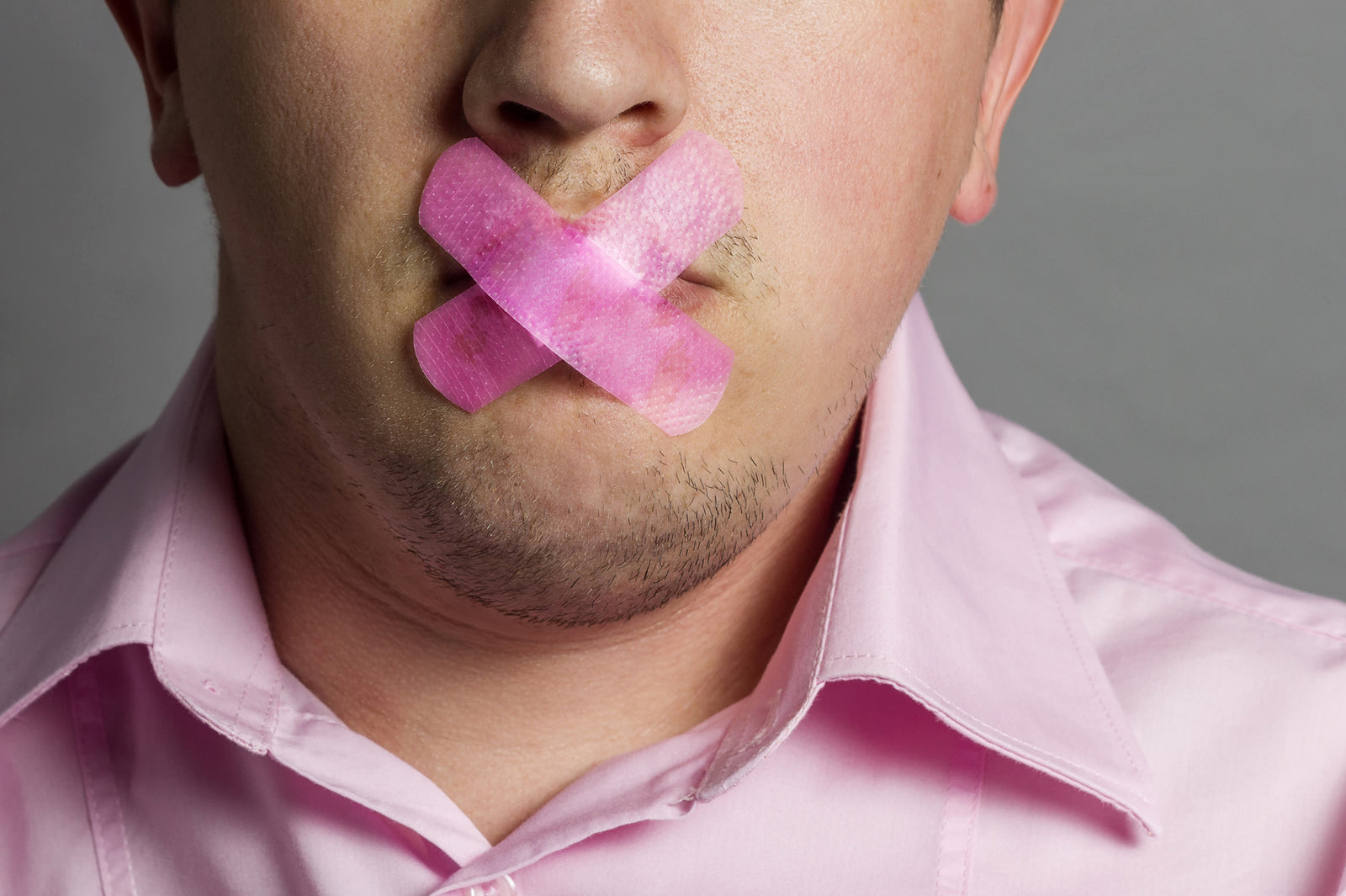


Texas Tech leaders have somehow convinced themselves that race and gender are not legitimate topics to discuss in a psychology class. That’s absurd on its face: You can’t teach human behavior while treating basic dimensions of human identity as off-limits.
Will Crescioni, a lecturer in Texas Tech’s Department of Psychological Sciences, submitted his course materials for his honors-level psychology course the same day the Texas Tech system issued a memo ordering universities to review courses and ensure faculty do not “promote or otherwise inculcate” certain ideas related to race and gender. Just over a month later — and only two days before the semester began — his course was scrapped. His offense? Refusing to alter his course content.
Angela Smith and Leslie Spencer
Daily Princetonian
Excerpt: In a recent Opinion piece, Siyeon Lee and Charlie Yale critiqued a letter from Princetonians for Free Speech (PFS) to entering first-year students that appeared recently in The Princeton Tory, the University’s leading conservative political magazine. In their piece, Lee and Yale questioned why we chose to publish in “a journal that only appeals to a select few on this campus,” and accused us of holding “selective views of free speech.”
To be clear: there is no such thing as free speech for some but not for others. Other than speech that is unprotected by First Amendment law, PFS is committed to defending the widest possible freedom of speech and open discourse for everyone, no matter how unpopular or offensive the point of view.
Calvin Kenjiro Grover and Luke Grippo
Daily Princetonian
Excerpt: More than a year ago, pro-Palestine protesters concluded a three week-long sit-in with an ominous message: “See you at Reunions.”
While the subsequent disruptions at that year’s Reunions and Commencement were far less dramatic than the ‘Gaza Solidarity Encampment,’ they were, for Princeton, still substantial: blood-colored dye in the SPIA fountain, a loud walkout at a speech by University President Christopher Eisgruber ’83, and even an attempt to block the P-Rade.
Jerry A. Coyne
Why Evolution is true
Excerpt: This article in The Atlantic by Frank Foer, former editor of The New Republic (and who attended Columbia) gives a thorough and excellent summary of the history of antisemitic protests at the school. You can probably access it for free by clicking on the headline below, or you can find the article archived here. It’s well worth reading.
Sharon Otterman
New York Times
Excerpt: Dozens of pro-Palestinian demonstrators barged into Milbank Hall on Barnard College’s Manhattan campus on Wednesday and staged a sit-in over the expulsion of two students who interrupted a class on Israel, sparking a showdown with Barnard’s administration.
Lexi Lona Cochrane
The Hill
Excerpt: President Trump said Tuesday that he will seek to block the federal funding for colleges and universities “that allow illegal protests” on their campuses.
“All Federal Funding will STOP for any College, School, or University that allows illegal protests. Agitators will be imprisoned/or permanently sent back to the country from which they came,” the president wrote in a Truth Social post, though he did not specify an enforcement mechanism.

by Johanna Alonso, Inside Higher Ed
Students at the State University of New York at Albany don’t view their recent protest of Ian Haworth, a conservative writer and podcaster who has made provocative statements about transgender people, as a disruption of his speaking engagement on campus.

The plaintiffs in Missouri v. Biden have won and received a court order vindicating their free speech rights. The dire predictions after the Supreme Court found insufficient standing to support a preliminary injunction in Murthy v. Missouri have failed to materialize. On March 25, the district court in Louisiana signed a consent decree in Missouri v. Biden admitting that the government wrongfully squelched Americans’ speech for years by strong-arming social media companies to eliminate disfavored speech. The decree allows New Civil Liberties Alliance (NCLA) plaintiffs Jill Hines and Aaron Kheriaty, along with Jim Hoft of Gateway Pundit and the Louisiana and Missouri attorneys general, to obtain sanctions should the surgeon general, CDC, or CISA attempt to do this again.

Over the past year, President Donald Trump’s administration has targeted international students in a series of restrictions, citing concerns about national security. Fear has spread among international students at Princeton, where 13% of undergraduates — and 45% of grad students — come from abroad. “This is not the safe haven that it was supposed to be,” B. ’27, a Princeton student from Latin America, told PAW.

The recent news about plummeting math preparation among University of California, San Diego, students was startling: Over five years, the number of incoming students deemed to need remedial math courses before taking calculus had risen from 32 in 2020 to more than 900 last fall.
Math achievement declines across the country are real, but data from a single campus is not representative, even if it makes national news. In fact, UCSD offers a poor reference point for policy discussions in California and most other states, given how unique its approach to math proficiency has been.

Northwestern University’s “Black Friday” agreement to pay $75 million to the Trump administration in exchange for regaining access to about $790 million in federal research funding raises free speech concerns, experts say.
“Northwestern has allowed its institutional judgment in terms of academic freedom, in terms of student speech, in terms of admissions criteria... to be overriden by the demands of the federal government, and that raises serious First Amendment problems,” said Northwestern law professor Heidi Kitrosser, a constitutional law expert.

From congressional hearings to donor revolts to headlines about campus protests, American universities are being told—loudly—that they’ve lost the public’s trust. But beneath the noise, there’s a quieter question that rarely gets asked: when Americans criticize universities, what do they actually want them to do instead?
A new study published in Science Advances by economists at Cornell University and the University of Regensburg examines what societal roles Americans believe universities should engage in beyond their core mission of education and research.

Duke’s fight against the Trump administration has a new front: employee speech. After the White House accused the school of maintaining unlawful racial preferences and cut millions of dollars in research funding as punishment, the University ordered its employees to keep silent.
In late August, Jenny Edmonds, Sanford School of Public Policy’s associate dean of communications and marketing, emailed faculty members that all requests about “Duke and current events” must go through the University’s PR office. She cited increased scrutiny on universities and their policies and admonished faculty to stay in their lanes, discussing only their research with the media. While Edmonds’s message was limited to the public policy school, faculty across the university got similar messages.
Adam Goldstein
Chronicle of Higher Education
Excerpt: A recent essay in these pages by Charles F. Walker posits that the Foundation for Individual Rights and Expression’s rankings don’t actually measure the speech climate of college campuses because they penalize colleges for disruptive speech that is constitutionally protected. Walker’s argument is rooted in a number of misconceptions, not the least of which is that he seems not to understand what the rankings are for. Moreover, he misrepresents the law around disruptive protests. But because the first problem swallows the second, let’s start there.