
by Megan Zahneis, Chronicle of Higher Education
Recently proposed and passed legislation that targets tenure and diversity, equity, and inclusion efforts is having a chilling effect on the recruitment of faculty members and administrators in Florida and Texas, where some of the highest profile laws and bills of that type have been undertaken.

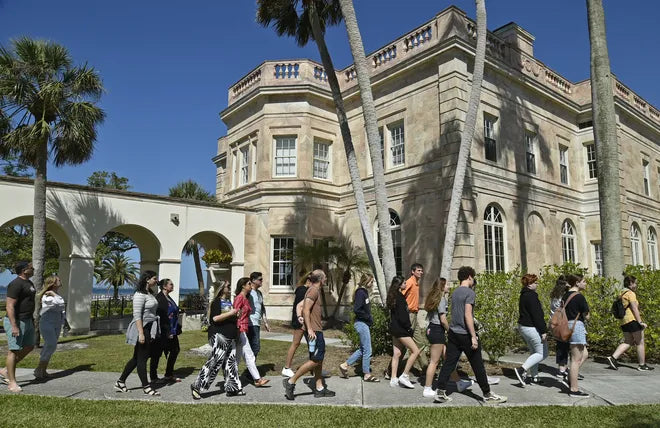
Aaron Hillegass attended New College of Florida as an undergraduate, had a successful career as a software engineer, and returned to the school this January to teach in its new data science program.
By ABIGAIL ANTHONY for The National Review
I arrived at Princeton University in September 2019. I had looked at Princeton online and thought, “one day . . .”
Eyal Press
New Yorker
Excerpt: In 2005, a “working definition” of antisemitism was posted on the website of the European Monitoring Centre on Racism and Xenophobia, a research institute founded by the European Union. It described antisemitism, somewhat vaguely, as “a certain perception of Jews, which may be expressed as hatred toward Jews.”
On July 23rd, Columbia reached a settlement with the Administration which required it to pay the government two hundred million dollars over the next three years and to broaden its “commitment to combating antisemitism,” in exchange for having hundreds of millions of dollars in federal grants reinstated. Ten days earlier, Columbia had incorporated the I.H.R.A. definition of antisemitism into both its anti-discrimination policies and the work of its Office of Institutional Equity.
Michael C. Bender, Alan Blinder, Michael S. Schmidt
New York Times
Excerpt: Harvard University has signaled a willingness to meet the Trump administration’s demand to spend as much as $500 million to end its dispute with the White House as talks between the two sides intensify, four people familiar with the negotiations said.
According to one of the people, Harvard is reluctant to directly pay the federal government, but negotiators are still discussing the exact financial terms. The sum sought by the government, which recently accused Harvard of civil rights violations, is more than twice as much as the $200 million fine that Columbia University said it would pay when it settled antisemitism claims with the White House last week.
David French
New York Times
Excerpt: Like many of its conservative alumni, I have a complicated relationship with Harvard. I grew up in a small town in Kentucky, where I went to public school. I attended college at a small Christian university in Nashville. I never had a thought that I could attend Harvard Law School. But friends urged me to try. When I got in, it was so shocking that it felt miraculous. I knew it would change my life — and it did. It gave me some of my closest friends, it gave me career opportunities I couldn’t previously fathom, and it kindled in me a love for constitutional law. At the same time, the school had profound problems.
The more things changed, the more they stayed the same. In the 30 years since my graduation, the school has continued to change lives, and it has maintained one of the least tolerant cultures in American higher education.

Every so often, the complexities of the world break through the orange bubble that is Princeton University. There are occasional reminders of the world outside, like the pro-Ukraine flag-waving event outside FitzRandolph Gate, reminding us that a major conflict in Europe is still ongoing four years later. Even as a veteran, it still feels like something happening in a remote place. It was only when I attended the European Cultural Studies (ECS) Faber Colloquium, a requirement for the European Studies minor I am pursuing, that I reflected on Europe’s significance and the debt Princeton as an institution owes to Europe, from its architecture to its precept system.
Sebastian B. Connolly and Julia A. Karabolli
Harvard Crimson
Excerpt: Tucked away at the end of a corridor on the second floor of Harvard’s Divinity Hall, the offices of the Religion and Public Life program are usually quiet — a quietness that belies its position at the center of highly public controversy that, in just a few short years, has threatened to consume it entirely.
The program has been targeted in a lawsuit accusing Harvard of permitting antisemitism on campus and an early list of demands that the Trump administration considered imposing on Harvard. But RPL’s own faculty say that it is the critics of the program that are practicing intolerance as they seek to police pro-Palestine speech.

On February 19, the Princeton Council on Academic Freedom hosted Erwin Chemerinsky, Dean of the Berkeley School of Law at the University of California, Berkeley, to discuss his forthcoming book Campus Speech and Academic Freedom: A Guide for Difficult Times, co-authored with Howard Gillman. Chemerinsky described universities as operating in a moment of political pressure, as debates over Israel–Palestine, race, gender identity, and other charged issues intensify scrutiny of campus speech.
Throughout the talk, Chemerinsky argued that free speech is truly tested when we defend free expression we detest.
Jennifer Schuessler and Vimal Patel
New York Times
Excerpt: The Foundation for Individual Rights and Expression, an increasingly prominent free-speech organization, has long been known as a fierce opponent of campus political correctness. Since its founding in 1999, it has been celebrated for defending conservatives and other dissidents from the prevailing liberal culture at America’s universities.
The group, long a scourge of university administrators, also finds itself working to help protect schools it has criticized in the past from new threats. When FIRE filed a brief in support of Harvard’s lawsuit challenging the Trump administration’s cuts in research funds, the group noted its own record as “a leading critic of Harvard’s inconsistent and insufficient protection of free speech and academic freedom.”
Cathy Young
The Bulwark
Excerpt: Last week's right-wing freakout over the Cracker Barrel logo redesign—apparently amounting to white-guy erasure—had more than its share of sublimely ridiculous moments. But none, perhaps, were more emblematic of the current “anti-woke” crusade than the call to action from author, activist, and Manhattan Institute fellow Chris Rufo.
Of course, what also makes it noteworthy is that Rufo isn’t just some random social-media blowhard. In recent months, he has emerged as the unofficial ideologue of the Trumpian assault on the liberal cultural establishment.
Tom Nichols
The Atlantic
Excerpt: Seven years ago, Pauline Shanks Kaurin left a good job as a tenured professor at a university, uprooted her family, and moved across the country to teach military ethics at the Naval War College, in Newport, Rhode Island. She did so, she told me, not only to help educate American military officers, but with a promise from the institution that she would have “the academic freedom to do my job.”
But now she’s leaving her position and the institution because orders from President Donald Trump and Secretary of Defense Pete Hegseth, she said, have made staying both morally and practically untenable.
Robert Pondiscio
American Enterprise Institute
Excerpt: The conservative education watchdog group Defending Education has done important and often brave work exposing ideological overreach in K–12 schools. I’ve cited their reports and findings many times and consider them friends and compatriots, so I don’t say this lightly: they’ve badly misfired with their new report, Consultants in the Classroom: Making Big Money in K–12 Schools. So badly, in fact, that they should withdraw the report and issue a correction and apology.
Ryan Holiday
New York Times
Excerpt: For the past four years, I have been delivering a series of lectures on the virtues of Stoicism to midshipmen at the U.S. Naval Academy in Annapolis, Md., and I was supposed to continue this on April 14 to the entire sophomore class on the theme of wisdom.
Roughly an hour before my talk was to begin, I received a call: Would I refrain from any mention in my remarks of the recent removal of 381 supposedly controversial books from the Nimitz library on campus? My slides had been sent up the chain of command at the school, which was now, as it was explained to me, extremely worried about reprisals if my talk appeared to flout Executive Order 14151 (Ending Radical and Wasteful Government D.E.I. Programs and Preferencing). When I declined, my lecture — as well as a planned speech before the Navy football team, with which my books on Stoicism are popular — was canceled.
Abigail Anthony
National Review
Excerpt: Current Princeton undergraduate Alexandra Orbuch shared footage on social media of an event on campus that featured former Israeli Prime Minister Naftali Bennett. Predictably, activists tried to prevent him from speaking.

The meeting of New College of Florida’s Board of Trustees on Wednesday afternoon began with a full hour of fierce criticism from members of the community, as dozens of professors, students, and parents lambasted what they view as a hostile takeover of the institution by a Republican governor with likely presidential ambitions.
Emma Whitford
Inside Higher Ed
Excerpt: In a letter to American Federation of Teachers president Randi Weingarten, Sen. Bill Cassidy, the Louisiana Republican who chairs the education committee, accused American Association of University Professors president and AFT vice president Todd Wolfson of promoting “organizational antisemitism” within the AAUP.
Cassidy cited an August Inside Higher Ed interview with Wolfson in which the union leader stood against sending weapons to Israel, accused the Trump administration of weaponizing antisemitism for political gains and advocated for the Jerusalem Declaration on Antisemitism, a definition of antisemitism that does not include anti-Zionism.
By Stuart Taylor, Jr., President of PFS
Since the University of Chicago paved the way in 1967 with its Kalven Committee Report, some 30 other American universities and colleges have followed suit by insisting on “institutional neutrality” on political and social issues, while alsoaffirming their commitment to the academic freedom of faculty and students in the face of suppression from internal and/or external entities.
Samuel A. Church and Cam N. Srivastava
The Harvard Crimson
Excerpt: Only one-third of Harvard’s last graduating class felt comfortable expressing their opinions about controversial topics during their time at the College, the University’s 2024 senior survey found, reporting a 13 percent decrease from the Class of 2023.
Foundation for Individual Rights in Expression
Excerpt: The U.S. Department of Education’s Office for Civil Rights announced today it agrees with a federal court ruling that appropriately found the Biden-era Title IX rules to unconstitutionally restrict student First Amendment rights.
Those rules, effective in August 2024, infringed on constitutionally protected speech related to sex and gender. They also rolled back crucial due process rights for those accused of sexual misconduct on campus, increasing the likelihood that colleges would arrive at unreliable conclusions during those proceedings.
Academic Freedom Alliance
The Academic Freedom Alliance (AFA) today sent a letter to Columbia University regarding its investigation into a professor for criticizing the political statements of certain students and student groups on social media. On February 8, 2024, Columbia’s Office of Equal Opportunity and Affirmative Action informed Professor Shai Davidai that it had begun the investigation based on complaints that he “harassed” members of the community, asserting that his “public commentary since October 2023 . . . is perceived to be anti-Palestinian/Arab.”

The North Carolina chapter of the American Association of University Professors released an open letter Wednesday opposing a slate of higher education-related bills the group says will threaten academic freedom, diversity efforts and non-partisan university governance.

The Report, and the follow-up disciplinary reports now being issued, raise uncomfortable questions for professors and for university leaders alike. Are there limits to professors’ freedom to conduct research and teach courses however they think best? Do university leaders dare intervene if scholarship becomes excessively politicized?

by Abigail Anthony, Compact
Princeton has long had a reputation as the open-minded Ivy. High-school students enduring the arduous college-application process will come across articles describing Princeton as hospitable to conservatives, while the university’s president, Christopher Eisgruber, recently claimed, “We have civil discourse on this campus.” But Princeton’s reputation for relative openness is no longer deserved.