James Huffman
Quillette
Excerpt: Efforts to censure campus speech have occurred in almost every American state. The problem is not new. Advocates of academic censorship would do well to review the arguments of our predecessors. A little book published 74 years ago, in 1949, by Harvard University Press provides an opportunity to do just that. While the book focuses on American history, its insights are of worldwide relevance.

by Olivia Sanchez, Daily Princetonian
Executive Director of the American Civil Liberties Union (ACLU) Anthony Romero ’87 discussed the importance of the First Amendment at the final Princeton Progressive Law Society (PPLS) event of the 2022-23 academic year.

by Sally Satel, Persuasion
A foundational principle of truth-seeking is the norm of universalism: the concept that work must be judged on its own merits.

The North Carolina chapter of the American Association of University Professors released an open letter Wednesday opposing a slate of higher education-related bills the group says will threaten academic freedom, diversity efforts and non-partisan university governance.
by Joshua Katz
The university claims it fired me for a long-past offense -- for which I was already punished -- but the truth should worry everyone.

by Scott Jaschik, Inside Higher Ed
The university cited “core values and Christian tenets.” The Supreme Court has indeed ruled that private and religious college need not recognize unions, but some colleges do recognize them anyway.

by Emily Bobrow, The Wall Street Journal
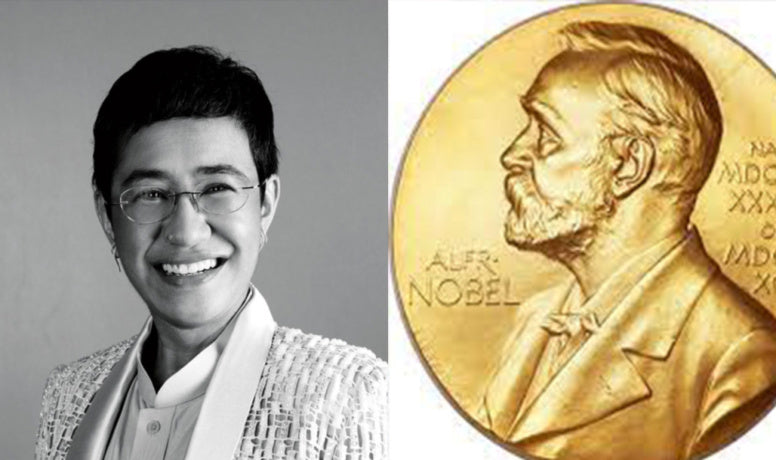
When the Philippine investigative journalist Maria Ressa won the 2021 Nobel Peace Prize, the committee called her “a fearless defender of freedom of expression” who “exposed the abuse of power, use of violence and increasing authoritarianism” of Rodrigo Duterte,
Princetonians for Free Speech editorial
In an April 29 editorial, Princetonians for Free Speech (PFS) laid out how the target on Princeton’s back on free speech, academic freedom, and antisemitism issues has been growing ever larger. Yet Princeton’s leadership continues to say publicly that everything is just fine at Princeton. Now something has happened that blows the cover off Princeton for everyone to see inside, and the repercussions will be very serious. It is untenable for Princeton’s leadership to continue to live in its bubble, seemingly divorced from reality, and to continue down the path of refusing both to admit there are problems and to take basic steps to address them.
Today, an article was published in Real Clear Politics, “Princeton Fails to Enforce Its Rules on Free Speech, Antisemitism”, written by Danielle Shapiro, who just graduated from Princeton in May. We will not repeat everything in her piece, but everyone interested in Princeton should read it. It is devastating, and the issues she raises will not end there. Her brave actions as a whistleblower will lead to story after story on this matter and will severely tarnish the reputation of Princeton. (Ms. Shapiro is on the board of PFS.)

A judge declared a mistrial on Friday in a case of five current and former Stanford University students related to the 2024 pro-Palestinian protests when demonstrators barricaded themselves inside the school president's office.
The case was tried in Santa Clara County Superior Court against five defendants charged with felony vandalism and felony conspiracy to trespass. The rest previously accepted plea deals or diversion programs. The jury was deadlocked. It voted nine to three to convict on the felony charge of vandalism and eight to four to convict on the felony charge to trespass. Jurors failed to reach a verdict after deliberations.
Ava Johnson
Daily Princetonian
In his recently released book “Terms of Respect,” Princeton University President Christopher Eisgruber ’83 presents a strong defense of free speech on college campuses. He locates the roots of contemporary free speech doctrine in the Civil Rights Era and ultimately concludes that “students are getting free speech right.”
This is a commendable analysis consistent with Eisgruber’s public defenses of student speech. But his framework is often unfairly paternalistic.