
Permitting speakers to be shouted down, allowing demonstrators to block access to speeches, or failing to provide sufficient security to ensure that a speech will be delivered...

A Texas A&M University dean canceled an "Ethics in Public Policy" graduate course three days into the spring semester, saying the professor refused to submit information needed to be exempt from a new ban on teaching gender and race ideology.
The dean specifically named professor Leonard Bright in a Wednesday email to his colleagues at the Texas A&M Bush School of Government and Public Service and used the course cancellation as a warning about following university processes. But Bright and other faculty advocates say they lack clarity about the rules for the ongoing course review and that administrators are using that ambiguity to their advantage.
March 11, 2023
By Matthew Wilson
The university’s bias-reporting system utterly fails to uphold the school’s stated commitment to ‘protect and promote free expression.’

by Leslie Spencer, '79
Hardly a day goes by without national media spotlighting controversies involving free speech and academic freedom at universities across the country. In California, Stanford Law School is scrambling to repair the damage done to its reputation when...
By Leslie Spencer ‘79
The Daily Princetonian recently reported that President Eisgruber has rejected the idea of adopting the principle of institutional neutrality.
At a time when universities throughout the country, including Harvard, University of Pennsylvania, Stanford, Johns Hopkins, USC, and Cornell, have flocked to adopt the principle to protect them from the myriad pressures to take stands on controversial issues such as the war in Gaza, President Eisgruber remains resolute against it.
Jessica Blake
Inside Higher Ed
Excerpt: Before James Ryan stepped down as president of the University of Virginia last month, the Department of Justice accused him and other leaders of actively attempting to “defy and evade federal antidiscrimination laws.” Harmeet Dhillon, assistant attorney general of the DOJ’s civil rights division, said that needed to change.
In a series of seven letters obtained by Inside Higher Ed via an open records request, Dhillon and other Department of Justice officials laid out their increasingly aggressive case that the university was at risk of losing federal funding, just as Ivy League institutions like Harvard and Columbia Universities had in the months prior for allegations of antisemitism.

On a rainy March afternoon, a half-filled lecture hall in the basement of East Pyne became an unlikely forum for questions about teaching and something much larger: fear, not just about what can be said in the classroom and on campus, but how it can be perceived in the public eye.
At an American Association of University Professors (AAUP) event on political pressure and faculty governance led by Joan W. Scott, a professor emerita of the School of Social Science at the Institute for Advanced Study, and Keeanga-Yamahtta Taylor, a Princeton professor of African American studies, the two situated the campus climate as increasingly shaped not only by internal debates over speech, but by growing federal government scrutiny and political intervention.

Free speech and open inquiry are not abstract ideals – they are the lifeblood of a healthy university community. At Princetonians for Free Speech (PFS), we strive to advance those principles through practical, tangible support for students and faculty who put them into action.
As such, we are pleased to tell you about two recent events at Princeton, supported by PFS that reflect this mission in powerful ways.
Jessica Blake
Inside Higher Ed
Excerpt: The Education Department is planning to move TRIO and numerous other higher education programs to the Labor Department as part of a broader effort to dismantle the agency and “streamline its bureaucracy.”
Instead of moving whole offices, the department detailed a plan Tuesday to transfer certain programs and responsibilities to other agencies. All in all, the department signed six agreements with four agencies, relocating a wide swath of programs.
By Tal Fortgang ‘17
The assassination of Charlie Kirk on September 10, 2025, at Utah Valley University was first and foremost a human tragedy. It was tragic for Kirk’s family, his friends, and his many fans and students. Kirk was a man, not a symbol or an idea, and every reflection on his murder must begin with reaffirming that.
Annabel Green '26
Philosophy Professor Jennifer A. Frey of the University of Tulsa delivered a lecture on October 21, 2025 titled “What is a University and How Can We Recover It?” as part of the James Madison Program’s Stuart Lecture Series on Institutional Corruption in America. Professor Frey explored the historical vocation of the university and the crisis facing the contemporary academy.
Kate Hidalgo Bellows and Katherine
Chronicle of Higher Education
Excerpt: In June 2020, as millions took to the streets to protest anti-Black racism, the president of the University of Virginia, James E. Ryan, created a small team with an ambitious agenda.
The university needed bold ideas, he told the new Racial Equity Task Force, and it needed them quickly.
Princetonians for Free Speech
Since the beginning of the year, Princetonians for Free Speech has been warning that Princeton and other universities were likely to be hit with a big increase in the current 1.4 % tax on endowment income. Now it is happening.
In the early hours of yesterday morning, the House Ways & Means Committee voted to report out its part of the Reconciliation bill – a.k.a. the “One Big Beautiful Bill.” This massive bill contains numerous tax provisions, including a large increase in the tax rate, now 1.4%, on endowment income. The bill creates a tiered tax rate based on an institution’s “student-adjusted” endowment. There are four rates: 1.4%, 7%, 14%, and 21%. The 21% rate applies to schools with an endowment of at least $2 million per student. It is the same as the corporate tax rate. Princeton qualifies for the 21%. According to one article, others qualifying for the highest rate are Harvard, Yale, Stanford, and MIT. Here is a list of the largest endowments. Princeton is listed at $34 billion. Note that Texas, which has a large endowment, is not covered by the endowment tax because it is a public university.
Michael A. Yassa
Inside Higher Ed
Excerpt: DEI is under fire—not just from politicians, but from within the academy itself. What began as a push for equity now faces an existential crisis. Faculty, students and even longtime advocates are questioning whether DEI has lost its way—whether it’s become too symbolic, too scripted or too powerless to make real change.
I spent five years as a DEI officer in higher education. I pushed for change in an academic system that claimed to want it. I still believe in DEI. Yet, I’ve seen how often it fails—not because the ideas are wrong, but because the execution is. Diversity, equity and inclusion, when thoughtfully and strategically embedded, can be transformative. But when they become symbolic gestures, checkbox exercises or top-down mandates imposed without trust or buy-in, they often backfire. I’ve seen both.
To: President Eisgruber, Members of the Board of Trustees of Princeton University
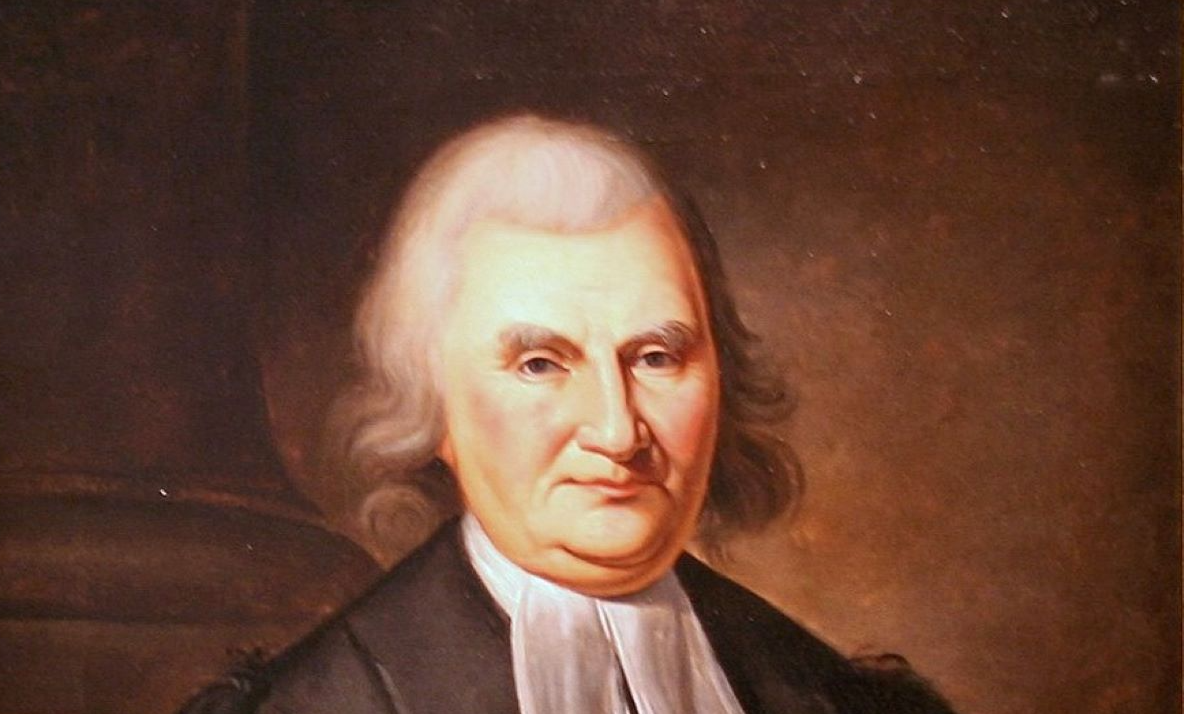
We are writing to you on behalf of Princetonians for Free Speech (PFS) to bring to your attention important new information relating to the petition to remove the statue of John Witherspoon from its prominent place on the plaza near Firestone Library and the Chapel. PFS is a Princeton alumni organization devoted to promoting free speech, academic freedom, and viewpoint diversity at Princeton. Thousands of Princeton alumni, as well as many students, faculty, and university staff, follow PFS on our website.
John McWhorter
Persuasion
Excerpt: In combating DEI, Donald Trump is doing the right thing. In that sentence I just wrote, I almost choked writing the six final words. But it is what I believe. A stopped clock is right twice a day, and it is high time America engaged in an honest conversation about this business called Diversity, Equity and Inclusion.
However, the actual substance of Trump’s Executive Order “Ending Radical and Wasteful Government DEI Programs and Preferencing” reveals—big surprise—a smash of the knout, a coarse, unreflective bleat in the guise of statecraft. Getting DEI right while retaining the moral sophistication our nation is capable of will require actions much more specific—intelligent, even.
Greg Lukianoff
The Eternally Radical Idea
While I certainly know critics of Israel who are not at all motivated by anti-Semitism, I have run into a lot more outright anti-Semitism over the past 10 years — and particularly in the last six months — than I ever thought I'd see in my lifetime. Anti-Semitism is vile, and I believe it is absolutely a growing problem today.
Given my point of view on this, it might be surprising to people that FIRE and I oppose the Antisemitism Awareness Act. To those who understand how a viewpoint-neutral defense of the First Amendment works in practice, however, this should come as no surprise at all.
Lauren A. Wright
The Atlantic
Right-wing commentators relish painting elite college students as ignorant, weak, and unprepared to meet the real world. Students have bolstered this perception by struggling to articulate positions on issues for which they profess deep concern.
But this grim picture leaves out an important distinction: Conservative students, rather than being coddled, face significant intellectual and social challenges in college. These challenges impart educational advantages by forcing conservatives to defend their points of view. Liberal students, surrounded by like-minded peers and mentors, have less opportunity to grow in this way.

PFS Editorial
Much of the debate over the possible removal of the statue of John Witherspoon from the Princeton campus is based on information about Witherspoon’s involvement with slavery and the debate over abolition contained in the University’s Princeton & Slavery Project (the Project).