
On a rainy March afternoon, a half-filled lecture hall in the basement of East Pyne became an unlikely forum for questions about teaching and something much larger: fear, not just about what can be said in the classroom and on campus, but how it can be perceived in the public eye.
At an American Association of University Professors (AAUP) event on political pressure and faculty governance led by Joan W. Scott, a professor emerita of the School of Social Science at the Institute for Advanced Study, and Keeanga-Yamahtta Taylor, a Princeton professor of African American studies, the two situated the campus climate as increasingly shaped not only by internal debates over speech, but by growing federal government scrutiny and political intervention.

Free speech and open inquiry are not abstract ideals – they are the lifeblood of a healthy university community. At Princetonians for Free Speech (PFS), we strive to advance those principles through practical, tangible support for students and faculty who put them into action.
As such, we are pleased to tell you about two recent events at Princeton, supported by PFS that reflect this mission in powerful ways.
Jessica Blake
Inside Higher Ed
Excerpt: The Education Department is planning to move TRIO and numerous other higher education programs to the Labor Department as part of a broader effort to dismantle the agency and “streamline its bureaucracy.”
Instead of moving whole offices, the department detailed a plan Tuesday to transfer certain programs and responsibilities to other agencies. All in all, the department signed six agreements with four agencies, relocating a wide swath of programs.
By Tal Fortgang ‘17
The assassination of Charlie Kirk on September 10, 2025, at Utah Valley University was first and foremost a human tragedy. It was tragic for Kirk’s family, his friends, and his many fans and students. Kirk was a man, not a symbol or an idea, and every reflection on his murder must begin with reaffirming that.
Annabel Green '26
Philosophy Professor Jennifer A. Frey of the University of Tulsa delivered a lecture on October 21, 2025 titled “What is a University and How Can We Recover It?” as part of the James Madison Program’s Stuart Lecture Series on Institutional Corruption in America. Professor Frey explored the historical vocation of the university and the crisis facing the contemporary academy.
Kate Hidalgo Bellows and Katherine
Chronicle of Higher Education
Excerpt: In June 2020, as millions took to the streets to protest anti-Black racism, the president of the University of Virginia, James E. Ryan, created a small team with an ambitious agenda.
The university needed bold ideas, he told the new Racial Equity Task Force, and it needed them quickly.
Princetonians for Free Speech
Since the beginning of the year, Princetonians for Free Speech has been warning that Princeton and other universities were likely to be hit with a big increase in the current 1.4 % tax on endowment income. Now it is happening.
In the early hours of yesterday morning, the House Ways & Means Committee voted to report out its part of the Reconciliation bill – a.k.a. the “One Big Beautiful Bill.” This massive bill contains numerous tax provisions, including a large increase in the tax rate, now 1.4%, on endowment income. The bill creates a tiered tax rate based on an institution’s “student-adjusted” endowment. There are four rates: 1.4%, 7%, 14%, and 21%. The 21% rate applies to schools with an endowment of at least $2 million per student. It is the same as the corporate tax rate. Princeton qualifies for the 21%. According to one article, others qualifying for the highest rate are Harvard, Yale, Stanford, and MIT. Here is a list of the largest endowments. Princeton is listed at $34 billion. Note that Texas, which has a large endowment, is not covered by the endowment tax because it is a public university.
Michael A. Yassa
Inside Higher Ed
Excerpt: DEI is under fire—not just from politicians, but from within the academy itself. What began as a push for equity now faces an existential crisis. Faculty, students and even longtime advocates are questioning whether DEI has lost its way—whether it’s become too symbolic, too scripted or too powerless to make real change.
I spent five years as a DEI officer in higher education. I pushed for change in an academic system that claimed to want it. I still believe in DEI. Yet, I’ve seen how often it fails—not because the ideas are wrong, but because the execution is. Diversity, equity and inclusion, when thoughtfully and strategically embedded, can be transformative. But when they become symbolic gestures, checkbox exercises or top-down mandates imposed without trust or buy-in, they often backfire. I’ve seen both.
To: President Eisgruber, Members of the Board of Trustees of Princeton University
We are writing to you on behalf of Princetonians for Free Speech (PFS) to bring to your attention important new information relating to the petition to remove the statue of John Witherspoon from its prominent place on the plaza near Firestone Library and the Chapel. PFS is a Princeton alumni organization devoted to promoting free speech, academic freedom, and viewpoint diversity at Princeton. Thousands of Princeton alumni, as well as many students, faculty, and university staff, follow PFS on our website.
John McWhorter
Persuasion
Excerpt: In combating DEI, Donald Trump is doing the right thing. In that sentence I just wrote, I almost choked writing the six final words. But it is what I believe. A stopped clock is right twice a day, and it is high time America engaged in an honest conversation about this business called Diversity, Equity and Inclusion.
However, the actual substance of Trump’s Executive Order “Ending Radical and Wasteful Government DEI Programs and Preferencing” reveals—big surprise—a smash of the knout, a coarse, unreflective bleat in the guise of statecraft. Getting DEI right while retaining the moral sophistication our nation is capable of will require actions much more specific—intelligent, even.
Greg Lukianoff
The Eternally Radical Idea
While I certainly know critics of Israel who are not at all motivated by anti-Semitism, I have run into a lot more outright anti-Semitism over the past 10 years — and particularly in the last six months — than I ever thought I'd see in my lifetime. Anti-Semitism is vile, and I believe it is absolutely a growing problem today.
Given my point of view on this, it might be surprising to people that FIRE and I oppose the Antisemitism Awareness Act. To those who understand how a viewpoint-neutral defense of the First Amendment works in practice, however, this should come as no surprise at all.
Lauren A. Wright
The Atlantic
Right-wing commentators relish painting elite college students as ignorant, weak, and unprepared to meet the real world. Students have bolstered this perception by struggling to articulate positions on issues for which they profess deep concern.
But this grim picture leaves out an important distinction: Conservative students, rather than being coddled, face significant intellectual and social challenges in college. These challenges impart educational advantages by forcing conservatives to defend their points of view. Liberal students, surrounded by like-minded peers and mentors, have less opportunity to grow in this way.

PFS Editorial
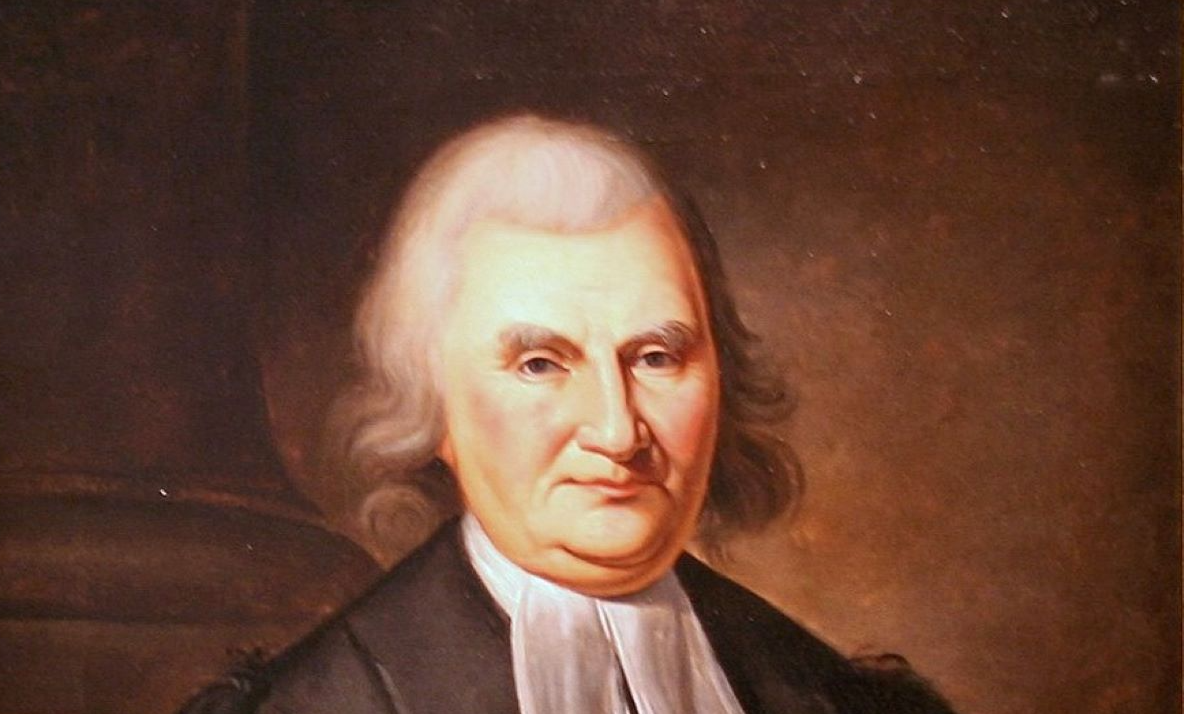
Much of the debate over the possible removal of the statue of John Witherspoon from the Princeton campus is based on information about Witherspoon’s involvement with slavery and the debate over abolition contained in the University’s Princeton & Slavery Project (the Project).
Editorial by Edward Yingling and Stuart Taylor, Jr.
Founders of Princetonians for Free Speech
It has been a very bad year for Princeton on free speech. Its reputation on this critical issue is in tatters.
Kian Petlin
Daily Princetonian
Excerpt: Two weeks ago, former Israeli Prime Minister Naftali Bennett visited campus to protests and a full lecture hall. His talk was interrupted several times, including by a walkout and a fire alarm — a remarkable spate of disruptions that prompted a University investigation, a public apology from University President Christopher Eisgruber ’83, and even a stand-alone editorial in The Wall Street Journal.
On Tuesday, another prominent figure in Israeli politics — this time the Israeli ambassador to the United States — came to give a talk. This time, he was met by a scaled-down audience, a smaller protest, and no disruptions inside — as well as a small army of Public Safety (PSafe) officers, University security, and free speech coordinators to ensure nothing went awry.
Charlie Yale
Daily Princetonian
Excerpt: What if I told you that Princeton is under investigation by the federal government for antisemitism, not because students, staff or faculty have filed a complaint, but because one man who is not affiliated with the University sent a complaint to the Department of Justice (DOJ)? What if I told you that this complaint and its overblown rhetoric is what led to the suspension of millions of dollars of federal funding to Princeton University?
For starters, it’s weird that the investigation spurring Trump’s rationale for the funding cuts was initiated by Zachary Marschall — a far-right blogger who has no connection to Princeton’s campus or community. Marschall made the jump from a few online videos of chants to the illogical and incorrect conclusion that they made Jewish students unsafe. If campus community members are feeling unsafe, allow them to make the complaint themselves.

On Sunday, May 24, Princetonians for Free Speech (PFS) hosted a breakfast at the Nassau Inn — and despite dreary skies outside, the energy inside couldn't have been brighter. About 70 alumni, current students and other free speech supporters turned out for what proved to be an engaging and inspiring morning.
PFS leadership set the stage with organizational updates from Co-founder Ed Yingling '70, President & CEO Todd Rulon-Miller '73, and Executive Director Angela Smith — including the exciting news that PFS has grown to over 26,000 email subscribers (20,000 of whom are Princeton alumni). This represents remarkable growth from just 1,400 two years ago, showing a momentum that was on full display during this packed event.
Gabe Levin
The Nation
Excerpt: Dr. Eric Cheyfitz, a professor of American studies at Cornell, said the university has canceled the two classes he was set to teach this semester. It comes as the provost is recommending that he be suspended for two semesters without pay on the grounds that he violated federal antidiscrimination laws, The Nation has learned.
Cheyfitz’s lawyer, Luna Droubi, said it’s the latest turn in months of investigations—carried out by different university bodies—into whether Cheyfitz, 84, told a graduate student last semester to drop a class he was teaching about Gaza because the student is Israeli. Cheyfitz, who is Jewish and whose daughter and grandchildren live in Israel, denies the allegation.
Andrea Brower
Common Dreams
Excerpt: For months before U.S. President Donald Trump took office, nearly daily reports rolled in of students and professors on trial for their activism for Palestinian life.
The number of the similar cases is impossible to know, due in part to near media omission. Many people who have faced or are currently facing investigations are instructed that they must remain silent (and isolated) as to not “compromise” the investigation. Some are quiet because their jobs, prospects for future employment, and safety are at stake. What is clear is that the trials are wide-reaching, extraordinarily punitive, largely coordinated, and were coming down rapidly across the country at educational institutions of all types even before Trump was sworn in.
Josh Moody
Inside Higher Ed
Excerpt: Former University of Virginia president Jim Ryan has broken his silence concerning his abrupt resignation, accusing the Board of Visitors of dishonesty and complicity in his ouster, which came amid federal government scrutiny over the university’s diversity, equity and inclusion practices.
Judith Butler
Chronicle of Higher Education
Excerpt: On September 4, I received an email from the University of California at Berkeley’s chief legal counsel, David Robinson, informing me that my name has been handed over to the Trump administration in a file containing allegations of antisemitism.
A few days later, I discovered that the university had sent a list of 160 names to the Department of Education’s Office for Civil Rights. The list includes the names of students, staff, and faculty who may well suffer serious consequences, including the loss of jobs, expulsion, deportation, or harassment. This was a shock for many of us who believed that Berkeley is a university where one can expect support for freedom of expression and guarantees of fair procedure.
Jaweed Kaleem and Michael Wilner
LA Times
Excerpt: Hours after the Trump administration demanded that the University of California pay a $1-billion fine to settle federal accusations of antisemitism in exchange for restoring frozen grant funding to UCLA, Gov. Gavin Newsom called the proposal “extortion” and said the state will go to court to protect the nation’s premier university system.
President Trump is “trying to silence academic freedom” by “attacking one of the most important public institutions in the United States of America,” Newsom said, adding that he would “stand tall and push back against that, and I believe every member of California Legislature feels the same way.”