James Huffman
Quillette
Excerpt: Efforts to censure campus speech have occurred in almost every American state. The problem is not new. Advocates of academic censorship would do well to review the arguments of our predecessors. A little book published 74 years ago, in 1949, by Harvard University Press provides an opportunity to do just that. While the book focuses on American history, its insights are of worldwide relevance.

by Olivia Sanchez, Daily Princetonian
Executive Director of the American Civil Liberties Union (ACLU) Anthony Romero ’87 discussed the importance of the First Amendment at the final Princeton Progressive Law Society (PPLS) event of the 2022-23 academic year.

by Sally Satel, Persuasion
A foundational principle of truth-seeking is the norm of universalism: the concept that work must be judged on its own merits.
Open Video of James Madison Program Panel Discussion on “The Fight for Free Speech at Princeton and Beyond” During 2022 Princeton Reunions configuration options
by Joshua Katz
The university claims it fired me for a long-past offense -- for which I was already punished -- but the truth should worry everyone.

by Scott Jaschik, Inside Higher Ed
The university cited “core values and Christian tenets.” The Supreme Court has indeed ruled that private and religious college need not recognize unions, but some colleges do recognize them anyway.

by Emily Bobrow, The Wall Street Journal
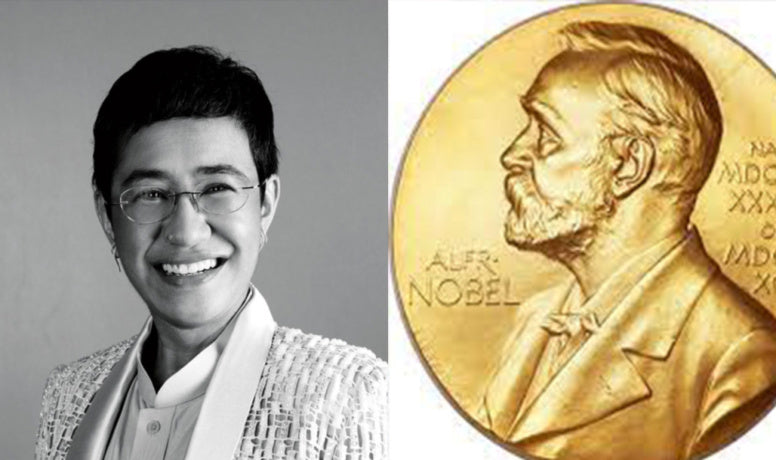
When the Philippine investigative journalist Maria Ressa won the 2021 Nobel Peace Prize, the committee called her “a fearless defender of freedom of expression” who “exposed the abuse of power, use of violence and increasing authoritarianism” of Rodrigo Duterte,
Gabe Levin
The Nation
Excerpt: Dr. Eric Cheyfitz, a professor of American studies at Cornell, said the university has canceled the two classes he was set to teach this semester. It comes as the provost is recommending that he be suspended for two semesters without pay on the grounds that he violated federal antidiscrimination laws, The Nation has learned.
Cheyfitz’s lawyer, Luna Droubi, said it’s the latest turn in months of investigations—carried out by different university bodies—into whether Cheyfitz, 84, told a graduate student last semester to drop a class he was teaching about Gaza because the student is Israeli. Cheyfitz, who is Jewish and whose daughter and grandchildren live in Israel, denies the allegation.
Andrea Brower
Common Dreams
Excerpt: For months before U.S. President Donald Trump took office, nearly daily reports rolled in of students and professors on trial for their activism for Palestinian life.
The number of the similar cases is impossible to know, due in part to near media omission. Many people who have faced or are currently facing investigations are instructed that they must remain silent (and isolated) as to not “compromise” the investigation. Some are quiet because their jobs, prospects for future employment, and safety are at stake. What is clear is that the trials are wide-reaching, extraordinarily punitive, largely coordinated, and were coming down rapidly across the country at educational institutions of all types even before Trump was sworn in.