
by Sally Satel, Persuasion
A foundational principle of truth-seeking is the norm of universalism: the concept that work must be judged on its own merits.

The North Carolina chapter of the American Association of University Professors released an open letter Wednesday opposing a slate of higher education-related bills the group says will threaten academic freedom, diversity efforts and non-partisan university governance.
Open Video of James Madison Program Panel Discussion on “The Fight for Free Speech at Princeton and Beyond” During 2022 Princeton Reunions configuration options
by Joshua Katz
The university claims it fired me for a long-past offense -- for which I was already punished -- but the truth should worry everyone.

by Scott Jaschik, Inside Higher Ed
The university cited “core values and Christian tenets.” The Supreme Court has indeed ruled that private and religious college need not recognize unions, but some colleges do recognize them anyway.

by Emily Bobrow, The Wall Street Journal
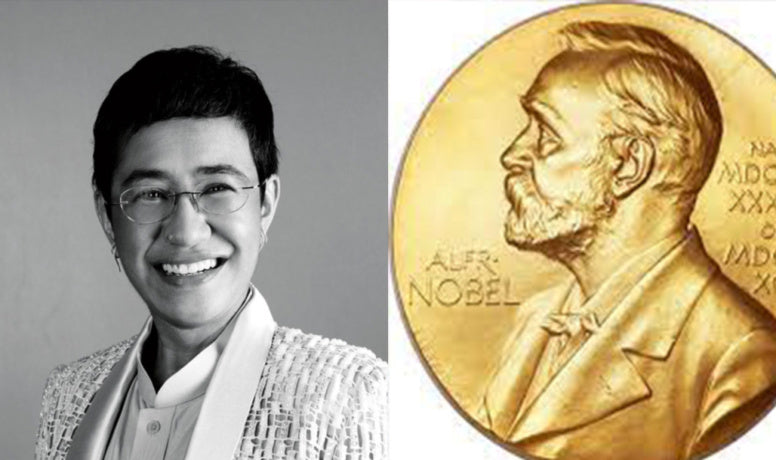
When the Philippine investigative journalist Maria Ressa won the 2021 Nobel Peace Prize, the committee called her “a fearless defender of freedom of expression” who “exposed the abuse of power, use of violence and increasing authoritarianism” of Rodrigo Duterte,

On Feb. 19, the University of Texas System’s Board of Regents approved new rules governing how faculty members can and cannot teach about “controversial” topics. FIRE is concerned that the guidance’s vague language, as well as the backdrop of censorship in Texas, will cause faculty to self-censor.

The University of Arkansas’ shameful capitulation to political pressure betrays its commitment to Professor Suski and threatens the rights of all who teach, study, and work there. The message to every dean, professor, and researcher is unmistakable: Your job hinges on whether politicians approve of your views.
Political interference in academic decision making must be rejected. When universities make hiring decisions based on politics, left or right, academic freedom gets weaker and campuses grow quieter.
Ilya Somin
Volokh Conspiracy, Reason Magazine
Excerpt: Yesterday, federal District Judge William K. Sessions, III, of the District of Vermont ordered the immediate release of Tufts graduate student Rumeysa Ozturk, whom ICE had detained and slated for deportation based on her anti-Israel speech.
In earlier posts on this topic, I have urged universities to file lawsuits challenging Trump's speech-based deportation policy, rather than letting students like Ozturk fend for themselves. I was happy to see that many schools (including my undergraduate alma mater Amherst College) filed an amicus brief supporting a lawsuit brought against the policy by the American Association of University Professors (the court recently issued a preliminary ruling in favor of AAUP, allowing the case to go forward). But universities should do more to protect their students.
Greg Lukianoff
The Eternally Radical Idea
Excerpt: As regular ERI readers and followers of FIRE will know, I’ve been defending free speech on campus since 2001 — nearly all of FIRE’s 25-year history. In 2022, FIRE expanded its mission, going from being the Foundation for Individual Rights in Education to the Foundation for Individual Rights and Expression. This was in no small part because we grew more and more concerned that the free speech crises we were dealing with on campus could and would spill over to other areas of our country.
I am speaking about bias reporting systems, sometimes called bias response teams, which are essentially snitch hotlines where people can report others for “offensive” or “hateful” speech. The act of doing this to your fellow Americans over protected speech would be bad enough, but these systems go further. They often consist not only of administrators, but also law enforcement.
Jonathan Turley
Jonathan Turley’s Blog
Excerpt: Last night, I discussed a new executive order signed by President Donald Trump that included an extension of his earlier move against “diversity, equity, and inclusion” (DEI) policies to the area of higher education. The order makes direct reference to the decision of the United States Supreme Court in Students for Fair Admissions v. Harvard, 600 U.S. 181 (2023) banning the use of race in college admissions and instructs the Departments of Education and Justice to investigate any circumvention of the prohibition by colleges and universities.
The order effectively carries out the mandate declared by Chief Justice John Roberts: “Eliminating racial discrimination means eliminating all of it.” Since the EO has not been officially posted on the government website, I have included the full language below.

Nearly three in four senior leaders described their level of uncertainty about the federal policy environment and its impact on planning as “extreme” or “moderate,” according to the poll. Another 19% reported “some” uncertainty and 7% described it as “slight.”
Trump’s impact on international student enrollment — with recent studies showing dips in graduate and new students from abroad — also loomed large for many leaders. Sixty percent said they were extremely or moderately concerned about immigration restrictions and visa revocations.

A federal appeals court is keeping in place the ban on the National Institutes of Health’s attempt to cap indirect research cost reimbursement rates for universities and researchers who receive its grant money.
The decision preserves institutions’ access to billions of dollars for annual expenses, such as lab costs and patient safety, which are not easily connected to specific projects. The NIH negotiates individual reimbursement rates with each institution, but a cap would change that and limit funding. U.S. District Court of Massachusetts judge Angel Kelley first blocked the rate cap last February, and it has remained blocked since.

President Donald Trump’s skepticism of the current accreditation system bled into Tuesday’s National Advisory Committee on Institutional Quality and Integrity (NACIQI) meeting—the first since Education Secretary Linda McMahon and other officials were confirmed.
The Trump administration has cast accreditation as beset by alleged woke priorities, a theme repeated Tuesday along with pledges to shake up the system.
Opinion by From the Community
Standford Daily
Excerpt: The Trump administration’s new “Compact for Academic Excellence in Higher Education” is a trap.
Presented last week to a group of nine universities that doesn’t yet include Stanford, the compact proposes a list of policy changes the administration hopes universities will agree to in exchange for preferential access to federal grants. Several of the proposed reforms respond to legitimate concerns about higher education and identify real challenges that elite universities have faced in recent years. As White House advisor May Mailman put it, “Our hope is that a lot of schools see that this is highly reasonable.”
Gabe Levin
The Nation
Excerpt: Dr. Eric Cheyfitz, a professor of American studies at Cornell, said the university has canceled the two classes he was set to teach this semester. It comes as the provost is recommending that he be suspended for two semesters without pay on the grounds that he violated federal antidiscrimination laws, The Nation has learned.
Cheyfitz’s lawyer, Luna Droubi, said it’s the latest turn in months of investigations—carried out by different university bodies—into whether Cheyfitz, 84, told a graduate student last semester to drop a class he was teaching about Gaza because the student is Israeli. Cheyfitz, who is Jewish and whose daughter and grandchildren live in Israel, denies the allegation.
Emma Whitford
Inside Higher Ed
Excerpt: As of last week, faculty at Ohio State University can no longer make land acknowledgments—verbal or written statements that recognize the Indigenous people who originally lived on the university’s land—unless it is directly relevant to class subject matter.
The new policy from the university’s Office of University Compliance and Integrity is one of many created in response to Ohio’s SB 1, a sweeping higher education law passed in March that seeks to eliminate DEI offices and scrub all mentions of diversity, equity and inclusion from university scholarships, job descriptions and more.
Robert Shibley
FIRE
Excerpt: Last month, the Department of Health and Human Services accused Harvard of violating Title VI, which bans discrimination based on race or nationality at any school that takes federal funding. Last week, it was reported that Harvard is nearing a $500 million settlement with the administration to end legal battles.
In the past two years alone, HHS noted, Harvard has accepted nearly $800 million from the government. But the threat to Harvard’s funding is just the headline. The sweeping theory of “harassment” HHS used to justify its claim has the potential to cause huge damage, not just at Harvard but across the nation, by collapsing protected speech and misconduct into a single charge that could turn campus protest into a civil rights violation.
Erin Shaw
Free The Inquiry, Heterodox Academy, Substack
Excerpt: Although requests for DEI statements in faculty hiring may be well-intentioned, they can actually undermine open inquiry by setting up ideological filters that exclude those who don’t share – or are unwilling to pretend they share – specific political opinions and worldviews.
But how common is the practice of asking for DEI statements in faculty hiring, and what patterns exist among such requests? At the top level, we found that 22.3%, or over one out of every five, of the 10,000 faculty job advertisements analyzed requested some kind of DEI-related material as a part of the application process. In other words, about one out of every five faculty members hired within the last year probably had to espouse a particular set of political views to have a chance of landing the jobs they sought.
Vilda Westh Blanc
City Journal
Excerpt: Higher education accreditation is in crisis. Accreditation was once an important signal, giving parents and students useful information about the value of a college degree. Now it has been reduced to a political weapon wielded against those who deviate from progressive orthodoxy.
This year, six public university flagships—Texas A&M and the Universities of Florida, Georgia, North Carolina, South Carolina, and Tennessee—joined forces to create the Commission for Public Higher Education. CPHE focuses on a different model of accreditation. By focusing on real student achievement, job readiness, and research productivity, these universities aim to make accreditation a tool for competitive enhancement, not a bureaucratic straitjacket.
Erin Shaw
Heterodox Academy
Excerpt: A win for open inquiry has appeared amidst relentless uncertainty in higher education. The Western Association of Senior College and University Commission (WSCUC), the accreditor of most universities in California and Hawaii, is reconsidering the diversity, equity, and inclusion (DEI) requirements for accreditation in light of the Trump Administration’s executive order on accreditation.
Though the total banning of all things “DEI” represents another political intrusion on academic freedom, dropping DEI as an accreditation requirement allows more space for freedom of thought in higher education as institutions are no longer bound to a particular partisan orthodoxy.
Nolan L. Cabrera
Inside Higher Ed
Excerpt: This is a call to my dear faculty friends and colleagues in higher education institutions. In the first months of the new presidential administration, and indeed since the election, many have been searching for answers. I have been in more meetings, gatherings and brain dump sessions than I can count, all focused on the same existential question: What does this all mean?
I am not calling for us to be lacking in strategy or unaware of our contexts. However, I am extremely concerned that a number of my fellow academics are engaging in pre-emptive self-censorship.
Jaweed Kaleem
LA Times
Excerpt: After the Trump administration told schools to dismantle diversity, equity and inclusion programs or face federal funding cuts, USC has deleted the website for its university wide Office of Inclusion and Diversity and merged it into another operation, scrubbed several college and department-level DEI statements, renamed faculty positions and, in one case, removed online references to a scholarship for Black and Indigenous students.
The University of Southern California’s actions — similar to some other universities throughout the country — appear to be aimed at avoiding federal scrutiny, according to USC faculty and staff and reviews of portions of the USC website archives.
Andrea Brower
Common Dreams
Excerpt: For months before U.S. President Donald Trump took office, nearly daily reports rolled in of students and professors on trial for their activism for Palestinian life.
The number of the similar cases is impossible to know, due in part to near media omission. Many people who have faced or are currently facing investigations are instructed that they must remain silent (and isolated) as to not “compromise” the investigation. Some are quiet because their jobs, prospects for future employment, and safety are at stake. What is clear is that the trials are wide-reaching, extraordinarily punitive, largely coordinated, and were coming down rapidly across the country at educational institutions of all types even before Trump was sworn in.
Robby Soave
Reason Magazine
Excerpt: Newly inaugurated President Donald Trump signed a bevy of executive orders earlier this week, including one that seeks to end the federal government's pressure campaign on social media companies.
The "Restoring Freedom of Speech and Ending Federal Censorship" executive order reaffirms the free speech rights of social media users and prohibits government agents from engaging in unconstitutional censorship.