By Marisa Hirschfield ‘27
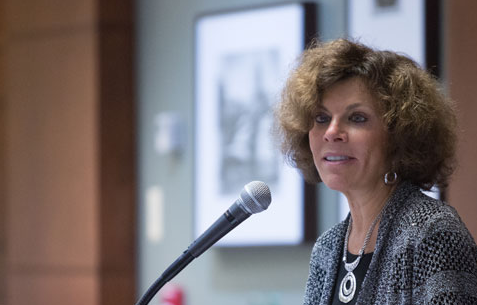
On September 17th, Harvard Law School professor Jeannie Suk Gersen delivered the annual Constitution Day Lecture in McCosh 50. The lecture, co-hosted by the James Madison Program and the Program in Law and Normative Thinking, was entitled “Our Civil Rights Revolution.” Professor Gersen discussed the history of affirmative action and the evolving meaning of civil rights.
Princetonians for Free Speech
The political violence that has ravaged America for too many years has now led to the horrifying assassination on September 10, on the campus of Utah Valley University, of conservative firebrand Charlie Kirk, a champion of free speech whose attacks on the left helped win him a big following among young conservatives while infuriating many on the left. He was planning to debate all comers at the campus event, as was his custom.
By Marisa Hirschfield ‘27
Last year, for a comedy show on campus, I wrote a sketch about the fictional Society to Lessen Unamerican Teaching (note the acronym), a group that wants to rewrite history textbooks in Florida. In the skit, the characters pitch ridiculous falsehoods about American history (e.g., Hillary Clinton wrote the Communist Manifesto and also brought smallpox to the New World). My intention was to satirize classroom censorship of historical injustice and expose the absurdity of legislation like the “Don’t Say Gay” bill, which shapes curricula in a politically-pointed way.
Khoa Sands
Princeton Tory
Excerpt: While democracy emphasizes a particularized government consciousness that reflects the collective awareness and identity of a specific demos, liberalism prioritizes the universality of individual rights and freedoms shaped by historical consciousness. The tension between these forms of consciousness underlies key debates in contemporary political philosophy regarding which political regime is most preferable.

by Leslie Spencer
Nadine Strossen, a liberal feminist and civil liberties activist, led the American Civil Liberties Union from 1991 to 2008, the first woman to do so.

by Stuart Taylor, Jr., for National Review
After the woke take down Witherspoon, if they succeed, who might be next? Maybe President (of the United States) James Madison, Founding genius and drafter of the First Amendment?

Last Wednesday, I sat in Green Hall having an “ordinary” but peculiar experience: listening to my professor read aloud from her private set of lecture notes, while the class sat and stared at a bare-bones slideshow of historical quotes. Around me, dozens of my classmates were dutifully typing out summaries of every slide.
But, as my professor narrated her questions about the origins of the peculiar ideas of sovereignty, my attention was more focused on the origins of the peculiar idea of the lecture.

On Jan. 5, the University released its annual Report of the Treasurer. Following a tumultuous year for higher education across the country, the report emphasizes the University’s lab partnerships with federal departments, close ties to active-duty soldiers and veterans, and involvement in AI and public service.
The report, entitled “In the Nation’s Service,” comes after approximately $200 million in research-specific funding was suspended last year by the Trump administration, then partially reinstated over the summer.

In an age of social media, access to news and information can seem less like a privilege than a tidal wave. What we end up seeing isn’t fully objective: It’s composed, in large part, of opinions and biased perspectives that arise in the aftermath of striking or unsettling events. As long as you have a device and an internet connection, you can share and consume opinions on any given subject with minimal vetting.
There’s no shortage of editorialized content in the world today. So why would you specifically seek out the opinion page of a newspaper, and why ours in particular? What do we, as a student newspaper, have to offer you as a member of the Princeton community?

The shooting at Brown is deeply tragic. But it is not the time for mere thoughts and prayers. It hasn’t been for decades. As another Ivy League university, this moment calls for Princeton to stand in solidarity with the victims of the Brown shooting by pushing for significant reform to fight violence. University President Christopher Eisgruber ’83 is uniquely equipped as the past chair and active board member of the Association of American Universities (AAU) — an organization with a precedent of condemning gun violence — to lobby for gun reform policies on the national and state level.
Roberto Lachner
Daily Princetonian
In a recent Opinion piece, Contributing Opinion Writer Vitalia Spatola takes on one of the more important questions Princeton students face: Whom should I date? I wholeheartedly agree your potential boyfriend’s or girlfriend’s values are of the utmost importance in making that decision. However, Spatola endorses a type of thinking harmful both to our romantic and non-romantic relationships, with deep consequences for civil discourse more broadly.
Charlie Yale
Daily Princetonian
It’s not often that an “F” on an essay draws national headlines. But I guess that’s this week’s fixation.
When students assume that grading is ideologically motivated and in bad faith — and when they choose to take these concerns straight to reactionary publications that have it out for higher education instead of engaging in productive dialogue with the members of the University community — our ability to have academically fulfilling conversations begins to slip away.
By Robert P. George
The Wall Street Journal
The ideological partisanship, dogmatism and bigotry on display in our society today are to some degree the fruit of our educational system. Too many college classrooms have become indoctrination camps. Some students buy into the leftist ideology they’re taught and become its enforcers. Others react by embracing opposing forms of extremism. Either way, radicalism and animus replace knowledge and wisdom.
So what should we do? The answer isn’t complicated, but acting on it will take determination and courage. Colleges and universities must return to offering a rigorous liberal arts education that refuses to engage in indoctrination and challenges groupthink. College courses must actively cultivate the virtues of curiosity, open-mindedness, intellectual humility, analytical rigor and, above all, dedication to the pursuit of truth.
Joseph Anthony Gonzalez '28
The specter that the “chilling” of free speech has replaced official administrative suppression is real. I have experienced it, and if empirical evidence is not enough, then the data will corroborate it. It has been recorded in college polls, surveyed, and yet still appears to be a mystery to the people in charge, as they change their tune and beat the drum of “Free Speech.” Maybe it is time that they give up the ghost.
Oliver Wu
Daily Princetonian
Excerpt: University President Christopher Eisgruber ’83 spoke about defending free speech on college campuses during a book talk at the new Princeton University Art Museum’s Grand Hall on Wednesday. The event was open to University students, faculty, and staff, but had limited spots. Eisgruber spoke for over half an hour before taking questions from the audience.
Eisgruber noted the tense climate for higher education under the second Trump administration. “American research universities are the best in the world, but today, they face unprecedented and withering attacks from our country’s own government,” he said. “Much of this attack is both unlawful and broadly unpopular.”
Chris Cleveland, Substack
Excerpt: In the September issue of the Princeton Alumni Weekly (PAW), there was a remarkable article. Alumni participation in Annual Giving had dropped dramatically over the last decade. This is a four-alarm fire -- not only for financial reasons, but because alumni participation is a key indicator for the national college rankings.
Elizabeth Hu
Daily Princetonian
Excerpt: University President Christopher Eisgruber ’83 addressed conflicts between free speech and censorship on college campuses during a discussion at the Princeton Public Library on Monday. He was joined in conversation by Deborah Pearlstein, Director of Princeton’s Program in Law and Public Policy.
He also addressed the difference between censorship and controversy through a reference to Judge Kyle Duncan, who was invited to speak at Stanford Law School in 2023. Duncan’s talk was interrupted by student protesters throughout and was eventually cut short. “That’s real censorship,” Eisgruber said. “It made it impossible for a speaker that some people on campus wanted to hear to be heard, and that should be recognized.”
City Journal
Excerpt:
Princeton University, like all Ivy League schools, has sunk more deeply into administrative activism over recent years. The school maintains a robust Diversity, Equity, and Inclusion (DEI) bureaucracy, with more than six DEI employees per 1,000 students. The school also displays several other activist commitments that distract it from its educational mission—most notably, Princeton’s decision to intervene in the Students for Fair Admissions case at the Supreme Court in favor of affirmative action.
Professors Robert P. George, Tom Ginsburg, Robert Post, David Rabban, Jeannie Suk Gersen, and Keith Whittington
Substack on Academic Freedom
Excerpt: We write as scholars of academic freedom to respond to the proposed Compact for Academic Excellence in Higher Education. We are politically diverse and do not share common views about the wisdom of particular proposals contained in the Compact. Nor do we agree on the extent or substance of the reforms needed in American higher education today. We are, however, united in our concern about key features of the proposed Compact.
The power to punish extramural speech has been abused against both conservative and liberal speakers in the past. The requirement of the Compact that universities and colleges censor students and faculty who voice support for “entities designated by the U.S. government as terrorist organization” imposes overly intrusive regulation of constitutionally protected speech.
David Montgomery '83
Princeton Alumni Weekly
Excerpt: President Christopher Eisgruber ’83’s new book about free speech and dissent on college campuses is hitting bookstores this fall, shortly ahead of the 10th anniversary of the student takeover of his office in Nassau Hall to demand racial justice, and it comes just as President Donald Trump and conservative critics assail universities as woke bastions of progressive intolerance and antisemitism that must reform or forfeit federal support.
In a recent interview with PAW, Eisgruber uses his sometimes besieged perch between the fiery young activists to his left and the culturally aggrieved cadres on his right to sketch the contours of a healthy free speech environment that can accommodate both.
Len Gutkin
Chronicle of Higher Education
Excerpt: In the summer of 2020, not long after the murder of George Floyd, the faculty and the president of Princeton University engaged in an especially long-winded instance of the political ritual common to the period. The president, Christopher L. Eisgruber, went first. Given “recent tragic events” and “the ongoing reality of oppression and violence against Black Americans,” Princeton “must examine all aspects of this institution — from our scholarly work to our daily operations — with a critical eye and a bias toward action.”
In his new book, Terms of Respect: How Colleges Get Free Speech Right, Eisgruber calls this letter “one of the most controversial statements” of his presidency. He goes on: “I would myself frame some of it differently if I were writing today.”
Cynthia Torres
Daily Princetonian
Excerpt: With the release of his latest book 12 years into his tenure, University President Christopher Eisgruber ’83 says he’s not done yet. “Right now, I feel energetic,” Eisgruber said in an interview with The Daily Princetonian. “I feel enthusiastic about the community of Princeton University and the mission of Princeton University.”
Every other Ivy League president has been replaced in the past two years, many of them forced out amid national firestorms. Columbia University has seen three presidents in a little over one year, and the leaders of the University of Pennsylvania and Harvard University resigned in quick succession following a December 2023 congressional hearing on antisemitism.
Cynthia Torres
Daily Princetonian
Excerpt: About three-quarters of the way into an interview with The Daily Princetonian, University President Christopher Eisgruber ’83 made a bold pronouncement: “American universities are the best that they’ve ever been.”
Eisgruber has been in the business of speaking up for universities since the beginning of the Trump administration, which has put unprecedented pressure on Princeton and its peer institutions. His new book, “Terms of Respect,” argues, as the book’s subtitle reads, “how colleges get free speech right.” Despite the perception of intolerance on American college campuses, Eisgruber writes, colleges still host thriving and robust discourse.
Shane McCauley
Daily Princetonian
Excerpt: Watching Ketanji Brown Jackson speak in Richardson Auditorium last Wednesday, I felt an eerie sense of whiplash as the conversation shifted between heartfelt discussions of the justice’s life story and nervous allusions to a democracy on the brink of collapse.
There was no following substantive conversation about what it means for the administration to always win at the Supreme Court. There were no questions from the audience pressing on Jackson’s recent fiery dissents. The discussion eventually came to whether Jackson believes a hot dog is a sandwich.
Isaac Bernstein and Justus Wilhoit
Daily Princetonian
Excerpt: Associate Justice of the Supreme Court of the United States Ketanji Brown Jackson sat down for an hour-long conversation with Professor Deborah Pearlstein in front of a full house at Richardson Auditorium on Wednesday. Nominated to the Supreme Court in 2022, she discussed her historic path to the nation’s highest court, the challenges of public life, and the lessons that have guided her career.
Isabel Vincent and Benjamin Weinthal
New York Post
Excerpt: A controversial Princeton professor with strong ties to the Iranian regime has quietly stepped down from the Ivy League school, following a campaign from dissidents to remove him.
Seyed Hossein Mousavian, a Middle East security and nuclear policy specialist, retired from his position after 15 years as the head of the school’s Program on Science and Global Security on June 1, according to an announcement listing retiring employees on Princeton’s website. The professor is controversial for being heavily involved in Iran’s chemical and nuclear programs beginning in 2004, long before the country was known to have been building up its nuclear arsenal, according to German journalist Bruno Schirra.
David A. Bell
French Reflections, Substack
Excerpt: Five years ago, amidst the protests that followed the killing of George Floyd, three hundred of my Princeton colleagues signed a remarkable letter, addressed to the university’s top officials. It decried the university administration’s “indifference to the effects of racism on this campus,” and “the mechanisms that have allowed systemic racism to work, visibly and invisibly, in Princeton’s operations.”
Five years later, the charge has again been made that “Princeton has, in fact, entrenched a system of racial discrimination and segregation.” But this time it comes not from progressive faculty, but in an essay by the right-wing activist Christopher Rufo.
Hope Perry ’24 and Julie Bonette
Princeton Alumni Weekly
Excerpt: The Class of 2025’s Class Day celebration on Monday, May 26, was met with an overwhelmingly positive response even after a movement to condemn the choice of wellness podcaster Jay Shetty ’25 as the keynote speaker.
Students had objected to Shetty because of allegations that he has engaged in plagiarism. The New York Times bestselling author and former monk told members of the class that they should focus on their own purpose and happiness rather than the opinions of others.
New Reunions policy information regarding free expression
Excerpt: As we enter this celebratory time, please be reminded of the University’s principles and policies related to free expression. Our Statement on Freedom of Expression guarantees our community “the broadest possible latitude to speak, write, listen, challenge, and learn,” while also noting that members of our community “may not obstruct or otherwise interfere with the freedom of others to express views they reject or even loathe.”
Matt Lamb
College Fix
Excerpt: Taxpayers will no longer subsidize a Princeton University program that induces “climate anxiety” among K-12 students, according to the Trump administration.
The Department of Commerce “announced that nearly $4 million in funding is ending to Princeton University,” according to an April 8 news release. The decision followed “a detailed, careful, and thorough review of the Department’s financial assistance programs against National Oceanic and Atmospheric Administration’s…current program objectives.”
Luke Grippo
Daily Princetonian
Excerpt: Congressional Republicans have launched an investigation into the financial aid practices of all eight Ivy League universities, including Princeton, accusing the universities of collectively raising the tuition prices. The probe follows broader scrutiny of higher education from the federal government, and it comes as Princeton officials have said they are committed to protecting financial aid.
The letter requested wide-ranging documents related to University admissions, financial aid, and communications between University administrators and college application-assistance websites such as the College Board and the Common Application. The University has until next Tuesday to release these documents to the committee.
Thomas Tao
Daily Princetonian
Excerpt: For too long, we have willfully ignored the rationale behind the antagonism that many of the 77 million Americans who re-elected Trump feel for academia. Now, more than ever, we must listen to the public on what we think are closed debates and be open to research spurred by those new ideas.
Luke Grippo and Irene Kim
Daily Princetonian
Excerpt: An hour after the Council of the Princeton University Community (CPUC) meeting on Monday, March 24, President Christopher Eisgruber ’83 addressed the Princeton town community to address the state of higher education, the University endowment, and ways to maintain collaboration between the town and the University.
The Princeton Town Hall Meeting is an event held annually by members of the Princeton Council in collaboration with Eisgruber, with the goal of facilitating open communication between the University and the town.
Elisabeth Stewart and Luke Grippo
Daily Princetonian
Excerpt: Princeton will freeze most faculty and staff hiring, citing uncertainty around federal funding and a potential increased endowment tax, according to a memo sent to faculty and staff Wednesday morning. The letter, from Provost Jennifer Rexford and Executive Vice President Katie Callow-Wright, follows many other universities adopting hiring freezes in response to funding uncertainty. It represents the University’s most significant response to date to recent federal actions.
Christopher L. Eisgruber
The Atlantic
Excerpt: The United States is home to the best collection of research universities in the world. Those universities have contributed tremendously to America’s prosperity, health, and security. They are magnets for outstanding talent from throughout the country and around the world.
The Trump administration’s recent attack on Columbia University puts all of that at risk, presenting the greatest threat to American universities since the Red Scare of the 1950s. Every American should be concerned.
Jerry Zhu and Frances Brogan
Daily Princetonian
Excerpt: On Wednesday, The Washington Post owner Jeff Bezos ’86 announced on X that the Post’s opinion pages would shift to focus on content about “personal liberties and free markets,” and that opposing viewpoints would be “left to be published by others.” While he invoked freedom, he made it clear that columnists at the Post would no longer be allowed free expression.
As the head editors of the The Daily Princetonian Opinion section, we were deeply disturbed by this move. At the ‘Prince,’ we see publishing an ideologically heterogenous range of important and interesting arguments, backed by credible evidence, as essential to the newspaper’s responsibility to our community.
Christofer Robles
Daily Princetonian
Excerpt: This Saturday, Princeton will confer the Woodrow Wilson Award, the University’s prestigious alumni prize for public service, to Associate Supreme Court Justice Elena Kagan ’81. The name of this annual honor is yet another reminder of the University’s predilection for praising its most polemic figures.
But there is no need to abandon uncomfortable history, nor is there any merit to overly defending the depraved. The University must commit to truth, representing its history and its icons more honestly. And as it does so, we need to flood the Princeton canon with more monuments to Princeton’s unsung heroes.
Greg Lukianoff
The Eternally Radical Idea, Substack
Excerpt: Over the past couple of months, I’ve explored how (despite numerous, contradictory, and ridiculous accusations to the contrary) FIRE has been able to remain non-partisan even in an era punctuated by intense partisanship. I also tried to turn that reflection into advice for others on how they can do the same.
Robert P. George
American Enterprise
Excerpt: A disturbing trend I have observed over the course of my academic career is the general decline in classical education. The slow demise of classical learning—particularly in core liberal arts fields—has hit our universities hard, damaging an entire generation’s understanding and embrace of civic thought and classical wisdom.
Even our nation’s so-called “elite” institutions—such as Princeton University, my own academic home—have moved away from classical education. Most strikingly, Princeton’s Classics Department eliminated bedrock Latin and Greek language requirements for students majoring in classics as part of an effort to become more interdisciplinary and “inclusive.” At the same time, signs of hope are emerging—especially in the past few years.
Hayk Yengibaryan and Christopher Bao
Daily Princetonian
Excerpt: In his annual State of the University letter published on Jan. 29, University President Christopher Eisgruber ’83 defended the University’s endowment, its diversity, equity, and inclusion (DEI) efforts, and institutional restraint. Though his letter does not, according to him, address the recent orders and policies from the Trump administration targeting universities, much of what Eisgruber wrote addressed attacks on higher education in recent years.
James (Jimmy) Lane ’92
Princetonians for Free Speech Original Content
I am a HUGE fan of the “I” in DEI. I will leave the “D” and “E” for others to opine. This essay is mostly a story of how multiple-perspectives critical thinking training by a compassionate classmate at Princeton University helped a first-generation college student become included in middle class America and why a university culture of free speech and open inquiry is so vital to upward mobility.