
by Asher Lehrer-Small, The Guardian
Since Texas lawmakers in 2021 passed a ban on lessons teaching that any one group is “inherently racist, sexist or oppressive”, a little-noticed provision of that legislation has triggered a massive fallout for civics education across the state.

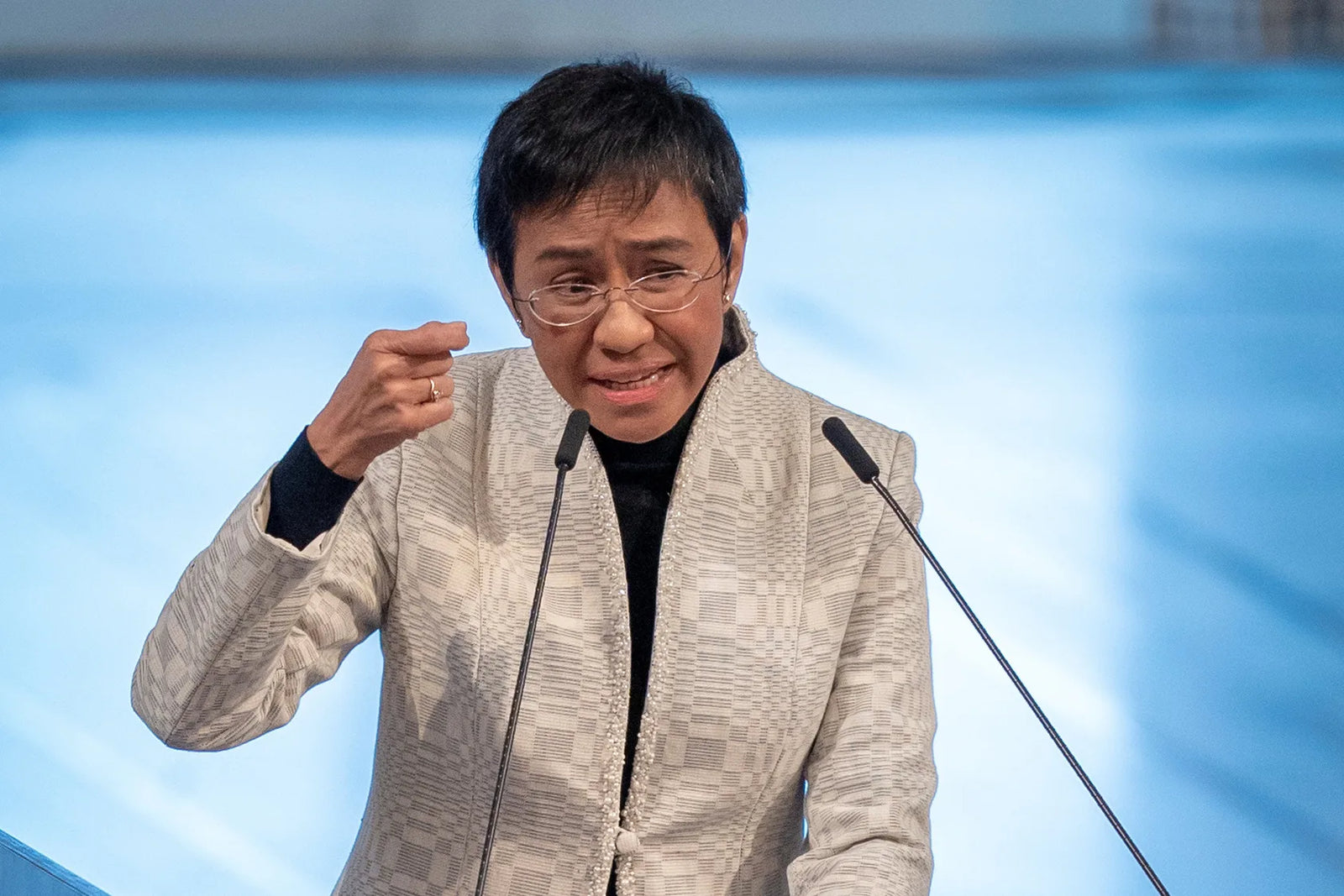
Maria Ressa, Class of 1986, received the Nobel Peace Prize in 2021 for her efforts to safeguard freedom of expression in the Philippines.


Stakes are high as the Trump administration looks to rewrite the rules governing accreditation in the first of two week-long rule-making sessions starting today. The overhaul could dramatically change who is in charge of academic oversight and what they evaluate when determining whether an institution should have access to federal aid.
Right-leaning think tanks applaud the changes, released last week in a 151-page draft, calling them an overdue means to ensure campus civil rights compliance, address college costs and ensure institutions are held accountable for their students’ outcomes. But accreditation experts, left-leaning policy analysts and student advocacy groups say the lengthy regulations, while vague and abstruse, pose a major threat to the future of institutional autonomy and America’s status as the crown jewel of global higher education.

On Sept. 18, 1894, the University of Wisconsin Board of Regents issued the greatest declaration in defense of academic freedom ever made by a university—an achievement even more remarkable because it was the first statement espousing academic freedom ever made by an American college, and one that introduced the concept of institutional neutrality.

A week before colleges must report years of admissions data to the federal government, a group of Democratic state attorneys general sued the Trump administration to block what they say is an unlawful demand.
In recent weeks, colleges and the institutional research offices tasked to collect and report the data have been sounding the alarm about the looming deadline. An association recently requested a three-month extension. The Education Department responded with a conditional three-week extension.

Iowa is considering a slate of bills that would limit speech in college classrooms and threaten academic freedom. These measures would mandate reviews of classroom content for DEI or critical race theory, remove topics like “multiculturalism” from teacher training programs, and enshrine a viewpoint-discriminatory definition of “antisemitism” into university policy.
These proposals test longstanding constitutional limits on government interference with academic freedom and classroom discussion, so let’s take a look at each one in turn.

Admiral Andrew Cunningham once said of the British Royal Navy, “It takes the Navy three years to build a ship. It will take 300 years to build a new tradition.” Gaining trust is harder than breaking it, and public trust, in particular, should not be trifled with. Over the last decade, trust in science, and academia more generally, has eroded substantially, partly if not largely due to internal problems.

This past April, the Yale Committee on Trust in Higher Education delivered a final report to university president Maurie McInnis on the problem of declining trust in higher education. The work of the 10-person faculty committee, established by President McInnis in spring 2025 and co-chaired by me and Professor Beverly Gage, focused in part on how Yale could right its own ship, ultimately recommending 20 steps that the university should take to help restore trust.
Fortunately, President McInnis took the report and its recommendations seriously, starting by taking responsibility (the report’s first recommendation) on behalf of the university for its role in the trust crisis.

Questioning colleges is normal. There are outstanding concerns about the experience, the education, and the enterprise of higher education: How much does it cost, and is that more than families can pay? Who gets in, and why? Are faculty members treated with dignity? What is college even for? So, although college leaders argue that a few of the concerns voiced in the document are legitimate, they also see within it the bane of Ilium.
On this week’s Radio Atlantic, I’m joined by Jack Stripling, the host of the College Matters podcast at The Chronicle of Higher Education, to consider higher education in the Trump era, and the purpose of college itself.

I recently listened to Ross Douthat’s interview with the philosopher Jennifer Frey. She is a serious thinker and an unusually courageous academic entrepreneur. What she built at the University of Tulsa before it was dismantled is exactly the sort of thing more universities should be attempting. Yet almost every argument she offered for the humanities is, I think, completely unpersuasive to anyone not already on our side of the table.

This report is addressed to university chancellors and presidents who are concerned about the state of academic scholarship in the humanities and the social sciences and who may wish, within their purview, to promote excellent scholarship in these vital fields. The charge to the committee, submitted in August 2025 and formulated by Daniel Diermeier, Chancellor of Vanderbilt University, and Andrew D. Martin, Chancellor of Washington University.

The rapid expansion of funding for “civics institutes,” along with the spreading of state mandates that civics be taught as a core subject in colleges, has ignited much controversy. Debates focus on whether civics should be prioritized above other vital subjects, whether civics education should be concentrated in autonomous centers on campus, and whether states should dictate how it should be taught.
Ironically, the impetus to make civics a discipline came from progressive scholars nearly 20 years ago, not the conservatives now founding civics institutes across the country.

Jan-Werner Müller, renowned scholar of democratic theory and the history of political thought, was named Class of 1943 University Professor of Politics. Professor Müller is the founding director for the Academic Freedom Initiative and Forum for the History of Political Thought, which bring scholars together to examine academic freedom and the development of political ideas, respectively. Princeton endows 25 University professorships, which are the highest honor for faculty at the University.

Princeton faces many domestic threats. In 2024, a Forbes College dryer burst into flames, setting off fire alarms and forcing students to evacuate the residential college. Last year, residents of Yeh College and New College West were plagued by droves of mice in dorm rooms when they returned from winter break. Still, despite the formidable challenges these campus snafus represent, the threat these mishaps pose to the University pales in comparison to recent polemics against Princeton’s humanities education.
In an October podcast episode with The Free Press, Shilo Brooks, a former Princeton lecturer and executive director of the James Madison Program, painted a grim picture of the state of humanities education at Princeton. But Brooks’ issues with the humanities at Princeton are completely unfounded — a simple rebuttal lies in students’ level of passionate and sincere engagement with the humanities.

Texas Tech leaders have somehow convinced themselves that race and gender are not legitimate topics to discuss in a psychology class. That’s absurd on its face: You can’t teach human behavior while treating basic dimensions of human identity as off-limits.
Will Crescioni, a lecturer in Texas Tech’s Department of Psychological Sciences, submitted his course materials for his honors-level psychology course the same day the Texas Tech system issued a memo ordering universities to review courses and ensure faculty do not “promote or otherwise inculcate” certain ideas related to race and gender. Just over a month later — and only two days before the semester began — his course was scrapped. His offense? Refusing to alter his course content.
Angela Smith and Leslie Spencer
Daily Princetonian
Excerpt: In a recent Opinion piece, Siyeon Lee and Charlie Yale critiqued a letter from Princetonians for Free Speech (PFS) to entering first-year students that appeared recently in The Princeton Tory, the University’s leading conservative political magazine. In their piece, Lee and Yale questioned why we chose to publish in “a journal that only appeals to a select few on this campus,” and accused us of holding “selective views of free speech.”
To be clear: there is no such thing as free speech for some but not for others. Other than speech that is unprotected by First Amendment law, PFS is committed to defending the widest possible freedom of speech and open discourse for everyone, no matter how unpopular or offensive the point of view.
Calvin Kenjiro Grover and Luke Grippo
Daily Princetonian
Excerpt: More than a year ago, pro-Palestine protesters concluded a three week-long sit-in with an ominous message: “See you at Reunions.”
While the subsequent disruptions at that year’s Reunions and Commencement were far less dramatic than the ‘Gaza Solidarity Encampment,’ they were, for Princeton, still substantial: blood-colored dye in the SPIA fountain, a loud walkout at a speech by University President Christopher Eisgruber ’83, and even an attempt to block the P-Rade.
Jerry A. Coyne
Why Evolution is true
Excerpt: This article in The Atlantic by Frank Foer, former editor of The New Republic (and who attended Columbia) gives a thorough and excellent summary of the history of antisemitic protests at the school. You can probably access it for free by clicking on the headline below, or you can find the article archived here. It’s well worth reading.
Sharon Otterman
New York Times
Excerpt: Dozens of pro-Palestinian demonstrators barged into Milbank Hall on Barnard College’s Manhattan campus on Wednesday and staged a sit-in over the expulsion of two students who interrupted a class on Israel, sparking a showdown with Barnard’s administration.
Lexi Lona Cochrane
The Hill
Excerpt: President Trump said Tuesday that he will seek to block the federal funding for colleges and universities “that allow illegal protests” on their campuses.
“All Federal Funding will STOP for any College, School, or University that allows illegal protests. Agitators will be imprisoned/or permanently sent back to the country from which they came,” the president wrote in a Truth Social post, though he did not specify an enforcement mechanism.