Commentary: What Happens if We Hold College and Nobody Comes

Jonathan Turley September 26, 2024 1 min read

Jonathan Turley
Jonathan Turley’s Blog

Excerpt: In the 1930s, Bertolt Brecht asked “What if they gave a war and nobody came?”  As someone who has been a teacher for over 30 years, I find myself increasingly asking the same question as trust and enrollments fall in higher education. There has been a precipitous decline in enrollments across the country as universities worry about covering their costs without raising already high tuition rates. From 2010 to 2021, enrollments fell from roughly 18.1 million students to about 15.4 million.

There is also an increasing view of higher education as an academic echo chamber for far left agendas. For many, there is little appeal in going to campuses where you are expected to self-censor and professors reject your values as part of their lesson plans.

Click here for link to full article

Leave a comment

Comments will be approved before showing up.


Also in National Free Speech News & Commentary

I Taught a Short Story. My College Fired Me For It.

Vinita Prabhakar September 04, 2026 1 min read

The letter, dated February 12, on South Florida State College letterhead and hand delivered by the Director of Human Resources, contained four sentences.

I would be placed on administrative leave with pay till the end of my contract. The contract would not be renewed. I would be relieved of all teaching duties immediately. A concluding sentence offered contact information if I had any questions.

I had many.

Read More
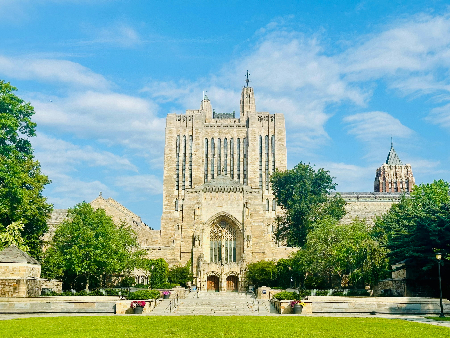
What to know about Yale’s negotiations with the Trump administration

Aria Lynn-Skov September 03, 2026 1 min read

Students returned to campus this fall after a tumultuous summer for Yale’s relations with the federal government. Since the start of the second Trump administration, universities have faced heightened pressure through threats to federal research funds, criticism of diversity policies and scrutiny into alleged antisemitism on campuses, and many of them have reached settlements. Yale seemed to be an exception. But not anymore.

As the academic year begins, the status and details of the federal negotiations remain unclear, although University President Maurie McInnis has released several comments about Yale’s talks with the federal government as pressure mounts against any settlement with the Trump administration. The ongoing period of uncertainty in the negotiations “may well continue, and we do not know for how long,” McInnis wrote in an Aug. 21 message to the Yale community.

Read More
What Universities Have Said So Far About the Pentagon's Demand for Foreign-Program Audits

Francie Diep September 03, 2026 1 min read

Earlier this month, the Pentagon ordered 30 universities to audit their ties with certain overseas institutions of concern, or else risk future federal funding. Few details have emerged about the universities’ responses as of Monday, the deadline to comply. One, the University of North Carolina at Chapel Hill, has confirmed publicly that it’s ending a study-abroad program in China.

The list of concerning foreign partners, often called the “1286 List” for the relevant section of the National Defense Authorization Act, is maintained by the Department of Defense. It was most recently updated in July. “These institutions have been confirmed to engage in activities that increase the likelihood of U.S. government-funded research and development efforts being misappropriated,” according to a news release from the Pentagon. 

Read More