
Princetonians for Free Speech
Excerpt: Dear Princeton Class of ’29:
This letter comes to you from the alumni organization, Princetonians for Free Speech (PFS). We have existed since you started high school four years ago. We were founded in response to a growing concern that Princeton has drifted from its core mission of the pursuit of knowledge and truth, and towards a narrow activism that threatens free speech, academic freedom, and viewpoint diversity.
The National Endowment for the Humanities has announced more than $75 million in awards, including $10 million grants to two public universities with “civics” schools and to an education network headquartered at a conservative think tank.
The $10 million going to the Foundation for Excellence in Higher Education is for a project dubbed Recovering the Humanities in Service of the University. Kelly Hanlon, FEHE’s operations director, said the foundation “does not have any political, ideological or religious affiliation, nor does it fund policy work.” But FEHE is based at—and shares its president with—the Witherspoon Institute, a conservative think tank next to Princeton University’s campus.
In an age of social media, access to news and information can seem less like a privilege than a tidal wave. What we end up seeing isn’t fully objective: It’s composed, in large part, of opinions and biased perspectives that arise in the aftermath of striking or unsettling events. As long as you have a device and an internet connection, you can share and consume opinions on any given subject with minimal vetting.
There’s no shortage of editorialized content in the world today. So why would you specifically seek out the opinion page of a newspaper, and why ours in particular? What do we, as a student newspaper, have to offer you as a member of the Princeton community?
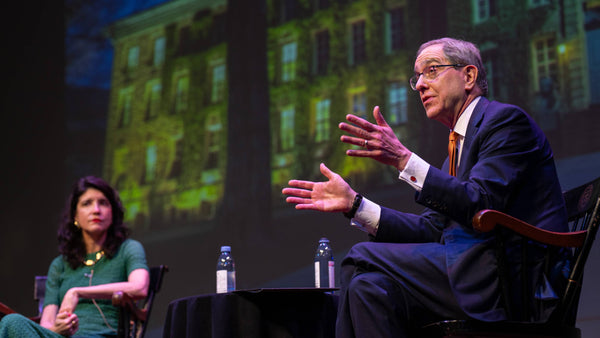
“When it comes to getting free speech right,” writes Princeton University President Christopher Eisgruber in the introduction to Terms of Respect, “America’s young people deserve higher marks than they get.” This is a central contention of Eisgruber’s new book, and it is, as those young people say, big – if true.
It also begs the question twice over, in the way that is all but inevitable when we talk about higher education and speech, two goods contemporarily treated as goods of themselves, if not the highest goods. Whether Eisgruber’s contention is correct depends on what is meant by free speech, then again on what is meant by getting it right.