
Cynthia Torres
Daily Princetonian
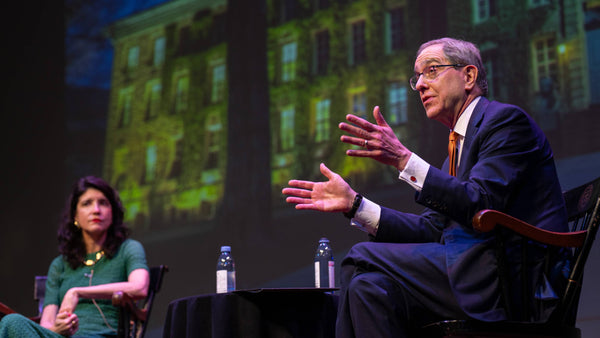
Excerpt: With the release of his latest book 12 years into his tenure, University President Christopher Eisgruber ’83 says he’s not done yet. “Right now, I feel energetic,” Eisgruber said in an interview with The Daily Princetonian. “I feel enthusiastic about the community of Princeton University and the mission of Princeton University.”
Every other Ivy League president has been replaced in the past two years, many of them forced out amid national firestorms. Columbia University has seen three presidents in a little over one year, and the leaders of the University of Pennsylvania and Harvard University resigned in quick succession following a December 2023 congressional hearing on antisemitism.
Comments will be approved before showing up.
In April 1995, University maintenance crews spent two days cleaning “walkways, benches, plazas and walls on campus,” working to remove not dirt or debris, but simple sidewalk chalk. The chalk drawings, according to a report from The Daily Princetonian, consisted of “pro-gay messages” written by hand during Pride Week. After the removal, advocates were rightly in uproar. Following the incident, the University, claiming that the discrepancy had transpired because of “cross-office confusion,” clarified its chalking policy — it was henceforth banned, in all cases.
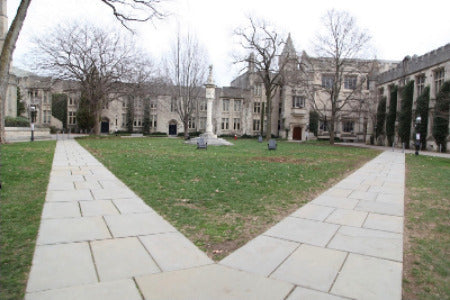
Three decades on, chalk at Princeton has found itself relegated to dusty trays in classrooms and lecture halls. Hardly anyone — students, activists, artists, campus organizations, candidates, schoolchildren — chalks University grounds anymore. Simply put, the University’s ban has worked. But the question remains: Why is Princeton so afraid of chalk?
There is exactly one kind of institution in the world whose product is “thinking” — the university. This is an existential challenge for every university, Princeton most definitely included, now that nearly all artificial intelligence is purpose-built to offload the hard work of thinking.
Universities need to return to the foundations of learning with trust — and verification — at the heart of their relationship with students. They also need to be far more prescriptive about what learning looks like so that students who arrive with limited capacity for deep reading have the time and space to develop their critical thinking skills.
The University has implemented a new limit on the number of Undergraduate Student Government (USG), Graduate Student Government, and Council of the Princeton University Committee (CPUC) student representatives allowed to attend faculty meetings.
In an email to student leaders obtained by The Daily Princetonian, Associate Dean of Undergraduate Students Ian Deas wrote that the new changes will go into effect at the Sept. 14 faculty meeting and each constituency will be able to send a maximum of two observers to a meeting. The Rules and Procedures of the Faculty do not specify the number of observers permitted from the student governments or CPUC.