Edward Yingling and Stuart Taylor
Excerpt: The lists of “top colleges” have varied little in many years. They always include the Ivies, Stanford, MIT, Cal Tech, etc. But that could change. Colleges of all types can differentiate themselves on the core values of free speech and academic freedom, and those that do will increasingly attract more and better students, faculty, and employment opportunities for their graduates.
However, most of these “prestige” schools have low ratings in the annual survey of students on free speech issues conducted by the Foundation for Rights and Expression (FIRE). Many have had recent embarrassments that rightfully tarnished their image on free speech. And many have atmospheres that smack of indoctrination and huge bureaucracies to enforce those atmospheres.
Click here for link to full article
Comments will be approved before showing up.
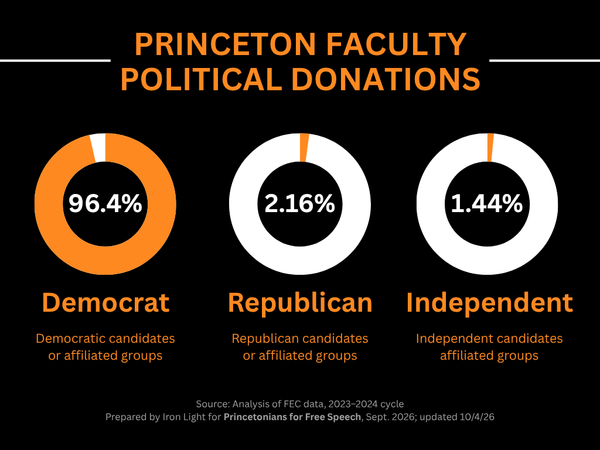
Princetonians for Free Speech (PFS) today released a first-of-its-kind study showing that 98% of reported political contributions by current Princeton faculty went to Democratic candidates or affiliated groups during the 2023-2024 election cycle. Independents and their affiliated groups received 2% of contributions, while Republicans and their affiliated groups received none.PFS said the findings point to a near-total absence of viewpoint diversity among the university's faculty.
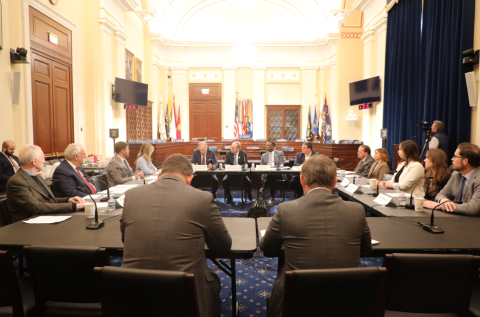
Princetonians for Free Speech participated for the fifth time at the 5th Annual Campus Free Speech Roundtable, hosted by North Carolina Congressman Greg Murphy, MD, held in Washington, D.C. on December 12th.
This year, Executive Director Angela Smith represented PFS at this event. The purpose of the 90-minute roundtable was to hear from free speech experts, engaged alumni, representatives from the Trump Administration, and lawmakers about the importance of protecting free speech in higher education.
Stuart Taylor Jr., president of "Princetonians for Free Speech" and an RCP contributor, joined Tom Bevan, Friday on the RealClearPolitics podcast, to talk about the Trump administration’s decision to suspend hundreds of millions of dollars in grants to Princeton.
They discuss this piece by Christopher Rufo and Ryan Thorpe in City Journal: "Princeton’s War on Civil Rights"