

Commentary: The Academic Memory Hole

November 30, 2022 1 min read

Commentary: The Academic Memory Hole

by Joshua Katz,  National Review

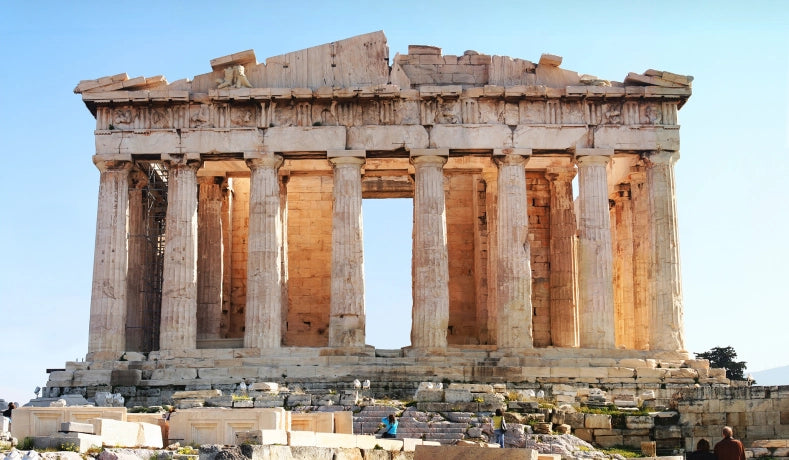
Last week, I was supposed to be in Greece. When, almost exactly a year ago, I was invited to speak at a four-day international conference in Athens on “The ‘Future of the Past’: Why Classical Studies Still Matter,” I accepted happily. Finally, after years of turmoil, I was going to have the chance to sit down with colleagues and help chart a workable course forward for our embattled subject. In the end, however, the fact that my wife is pregnant made me decide to participate instead over Zoom. This turned out to be a blessing, since had I gone in person, I would have had to spend Thanksgiving with some loathsome people.
Read more >>>


Leave a comment


Also in National Free Speech News & Commentary

Campus Leaders Can’t Avoid Viewpoint Diversity in Pursuit of Open Inquiry

December 04, 2025 1 min read

Despite campus leaders’ renewed commitment to open inquiry, it’s largely understood as the free exchange of ideas and constructive disagreement. However, the third pillar of open inquiry — viewpoint diversity — is rarely (if ever) explicitly mentioned by leaders as part of their commitment to open inquiry. In today’s changing campus climate, supporting free expression and respectful discussion have (thankfully) become fashionable; but viewpoint diversity remains a third rail of university life.

Read More
FIRE poll: 90% of undergrads believe words can be violence even after killing of Charlie Kirk

December 04, 2025 1 min read

Ninety one percent of undergraduate students believe that words can be violence, according to a new poll by the Foundation for Individual Rights and Expression and College Pulse.

The survey’s findings are especially startling coming in the wake of Charlie Kirk’s assassination — an extreme and tragic example of the sharp difference between words and violence.

“When people start thinking that words can be violence, violence becomes an acceptable response to words,” said FIRE Chief Research Advisor Sean Stevens. “Even after the murder of Charlie Kirk at a speaking event, college students think that someone’s words can be a threat. This is antithetical to a free and open society, where words are the best alternative to political violence.”

Read More
These universities are reviving higher education's civic seriousness

December 04, 2025 1 min read

High school seniors completing college applications confront a smorgasbord of choices. Herewith, eight suggestions:

Arizona State University, because of its School of Civic and Economic Thought and Leadership. University of Florida, because of its Hamilton School for Classical and Civic Education. Florida State University because of its Institute for Governance and Civics. The University of Texas, because of its School of Civic Leadership, and Civitas Institute. The University of Tennessee, because of its Institute of American Civics. The University of North Carolina because of its School of Civic Life and Leadership. The University of Mississippi because of its Declaration of Independence Center for the Study of American Freedom.

And The Ohio State University, because of its new Salmon P. Chase Center for Civics, Culture, and Society. These eight, with similar programs gestating in other states, are reviving universities’ civic seriousness, that is reinvigorating the humanities, inspiring students eager to grapple with big questions, and reversing academia’s forfeiture of its prestige.

Read More