Comments will be approved before showing up.
The University of North Carolina at Chapel Hill’s civics school has been controversial since early 2023, when the campus Board of Trustees called to “accelerate” its development before faculty even knew it was underway. The board’s then-chairman said on Fox News he was trying to “remedy” a lack of “right-of-center views” on campus.
The university said it selected the international law firm K&L Gates last summer to review “allegations and concerns” regarding the school. Over more than seven months, the review team analyzed hundreds of thousands of documents and interviewed dozens of people. The report is complete, reportedly at a cost of $1.2 million and running more than 400 pages. But the university is refusing to release any of it—despite calls from students, faculty and media to at least reveal some contents.
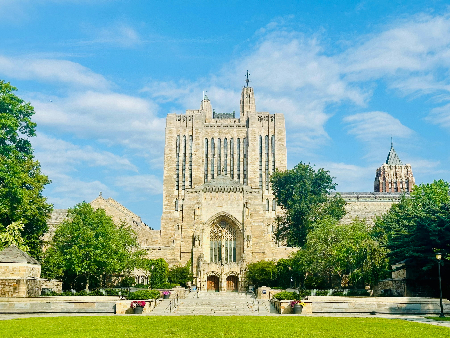
A curious feature of the recently released “Report of the Yale Committee on Trust in Higher Education,” which is rightly being hailed as a major statement of the academic-reform movement, is a certain gingerness when it comes to describing the shape and substance of professorial political radicalism — a significant driver of declining public faith in the sector.
True, the report names the concern that “liberal professors indoctrinate their students,” and it endorses processes to encourage “open interchange” rather than ideological conformity. But, perhaps out of a reluctance to lend aid and comfort to right-wing opponents of academic freedom, the report refrains from getting too specific about the contours of left-wing academic politicization.
Higher education groups representing administrators and faculty filed a lawsuit Monday challenging a recent executive order that threatens to strip federal contracts from colleges and other organizations over their diversity, equity and inclusion efforts.
The coalition — which also includes a faculty group at the University of Maryland, College Park, as well as the National Association of Minority Contractors and one of its local chapters — took aim at this definition in the new lawsuit. The groups argued that the definition is overly broad and encompasses lawful practices that “routinely, necessarily, and legally recognize and vary based on race.”