
Newly released FAQs on U. recording policy, explained

January 06, 2026 1 min read

Newly released FAQs on U. recording policy, explained

Luke Grippo
Daily Princetonian

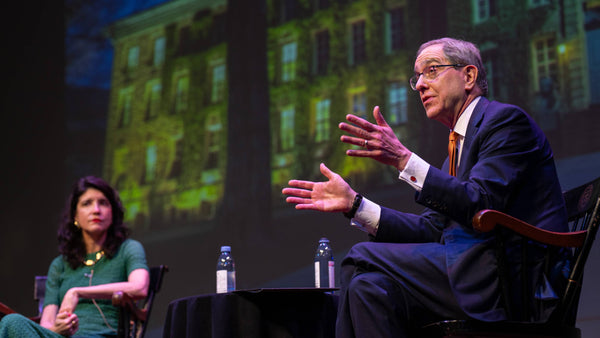
On Jan. 2, the Office of the Vice President for Campus Life released a set of Frequently Asked Questions (FAQs) regarding a new University policy regulating audio and visual recording. The policy classifies any recording made at events deemed private — where not all participants have consented — as “secret or covert,” placing such recordings in violation of University rules.

However, recording at public events, such as advertised public speaker events, is permitted unless the speaker, performer, or party hosting the event explicitly states otherwise. “The policy does not cover meetings open to all current members of the resident University community or to the public,” according to the FAQ website.
Click here for link to full article


Leave a comment


Also in Princeton Free Speech News & Commentary

Equality vs. Free Speech: A Debate at the Annual Tanner Lecture

January 07, 2026 4 min read

On November 12, former ACLU Legal Director David Cole delivered the annual Tanner Lecture on Human Values. His talk, entitled “A Defense of Free Speech from Its Progressive Critics,” drew a crowd to the Friend Center. Cole has litigated several major First Amendment cases and currently serves as a law professor at Georgetown. A self-identified progressive, Cole explicated an argument in favor of the First Amendment.

Cole outlined the main progressive critiques of the First Amendment. “What unites these critiques is the sense that the First Amendment is too protective at the cost of another very important value in our society: equality.” He also acknowledged the progressive skepticism of free speech’s “core demand” of neutrality – the idea that the government “must be neutral as to the content and viewpoint of speech when it is regulating private speakers.”

Read More
PAW omits reporter’s Supreme Court appeal — at the cost of journalistic principle

January 06, 2026 1 min read

Last month’s issue of the Princeton Alumni Weekly (PAW) fawns over Michael Park ’98, a right-wing lawyer and, since 2018, a U.S. circuit judge. Park’s portrait commands the cover, while the accompanying long-form profile, titled “The Contender,” speculates that he could become Donald Trump’s next nominee to the Supreme Court. The author is P.G. Sittenfeld ’07.    

But Sittenfeld is not just any old journalist. Last May, President Donald Trump pardoned Sittenfeld, a one-time rising star in Cincinnati politics, following his conviction on federal bribery and extortion charges in 2022. Sittenfeld, a Democrat, owes his freedom to Trump —  the man who nominated his subject Park to his judgeship, and the man with the power to elevate Park further to the nation’s highest court. Nowhere does PAW disclose this striking conflict of interest.

Read More
Princeton researchers weigh cost of impending federal funding rule requiring public access

January 06, 2026 1 min read

Researchers at Princeton and across the nation who receive federal funding have had a tumultuous year. Come Wednesday, they have one more thing to balance: a new federal public access policy that could cost researchers thousands of dollars more to publish in academic journals.

The new public access policy, known as the Nelson Memo, was released under the Biden administration in 2022 and mandates that any research that is funded by federal agencies be made publicly available at the time of publication.

Read More