
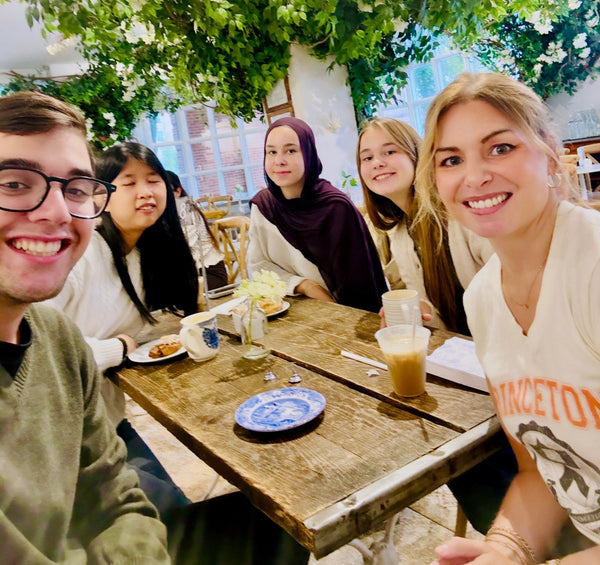


On Sunday, May 24, Princetonians for Free Speech (PFS) hosted a breakfast at the Nassau Inn — and despite dreary skies outside, the energy inside couldn't have been brighter. About 70 alumni, current students and other free speech supporters turned out for what proved to be an engaging and inspiring morning.
PFS leadership set the stage with organizational updates from Co-founder Ed Yingling '70, President & CEO Todd Rulon-Miller '73, and Executive Director Angela Smith — including the exciting news that PFS has grown to over26,000 email subscribers (20,000 of whom are Princeton alumni). This represents remarkable growth from just 1,400 two years ago, showing a momentum that was on full display during this packed event.
The heart of the program belonged to the students.
Amelia Freund, an undergraduate from the class of ‘28, joined Myles McKnight ‘23 and Danielle Shapiro ‘25, two recent graduates, on a panel that offered candid, first-hand perspectives on campus life. They covered the challenges of navigating the faculty and administration, what advocating for free speech on campus entails, the progress they think has been made and where shortfalls still exist.
Shapiro recounted organizing and attending an April 2025 event at McCosh Hall featuring former Israeli Prime Minister Naftali Bennett, where demonstrators shouted down the speaker, pulled a fire alarm to end the event, and hurled antisemitic slurs at Jewish attendees outside. She argued that the severity of the protester’s behavior and tactics undermined the attendees’ right to listen. Post-event, Shapiro personally spent over two hours with Princeton administrators detailing her experience and identifying the disruptive students involved. Even so, Princeton declined to discipline any of the students responsible and allowed seniors to graduate without consequence for their violations of university rules. PFS’s letter to President Eisgruber sent in the immediate aftermath of this event stressed the importance of enforcing university rules as well as First Amendment protections.
The panel also took aim at the media landscape students navigate when advocating for free speech on campus. The Daily Princetonian, panelists noted, leans heavily left in its editorial outlook, and students who champion free speech, viewpoint diversity, or dissenting perspectives routinely find it difficult to get their voices published there. They argued that the resulting gap in coverage leaves a distorted picture of campus discourse and makes the already uphill work of advocacy even harder.
One standout moment came from McKnight, who, along with a classmate during their time at Princeton, had the courage to approach the Administration directly and advocate for a robust free speech discussion at freshman orientation. Their persistence paid off: not only was the programming adopted, but it has also become a fixture of the orientation experience. So compelling was his case that the Administration invited him to address the entire incoming class on the subject — a remarkable testament to what one motivated student can achieve.
A Q&A and open discussion followed, with many lively comments and questions, including from the distinguished academic, columnist and book author Walter Russell Mead, who had delivered the keynote at the James Madison Program’s Reunions event. His participation added notable depth to the conversation.
It was a wonderful morning in Tiger Town with engaged alumni, student voices and a passion for free speech, academic freedom and viewpoint diversity leading the way.
Leave a comment
Comments will be approved before showing up.