Editor's Note: The little-known but important Council of the Princeton University Community (CPUC), established in 1969 as “a permanent conference of the representatives of all major groups of the University," is the University's second most important governing body after the Board of Trustees. Its charter is at cpuc.princeton.edu.
Excerpt: I write you directly because my March 11 petition, filed with the CPUC Secretary, seems not to have been distributed to the CPUC membership. This failure happened despite my explicit request that each member receive it. Nor have I received explanation why my request was not honored.
The agenda announced last week for tomorrow’s March 18 meeting makes no reference to my March 11 petition. Not by coincidence, I submit, the agenda instead includes as its second item a proposal by Provost Rexford on behalf of the CPUC Executive Committee. This proposal is to ban any and all video recording of CPUC meetings. Any vote on such a consequential measure should be by roll call. A full video record best enables all interested persons themselves to study public CPUC proceedings and to judge their conduct and substance.
Olivia Sanchez and Annie RupertusMarch 18, 20241 min read
Olivia Sanchez and Annie Rupertus Daily Princetonian
Excerpt: At the meeting of the Council of the Princeton University Community (CPUC) on Monday, March 18, Vice President for Campus Life W. Rochelle Calhoun introduced Princeton University’s renewed partnership with the Jed Foundation, a nonprofit dedicated to issues of emotional health and suicide prevention among young people.
Provost Jennifer Rexford introduced a proposal to establish a recording policy for CPUC meetings. Rexford also serves as the chair of the CPUC Executive Committee. Rexford read the draft proposal, “In order to promote the freedom to share ideas, video recording is prohibited at all meetings of the CPUC. Audio recording and still photography are permitted. Those in violation of the policy will be asked to stop recording. If repeated requests to cease recording are necessary, appropriate disciplinary action will be taken.
Excerpt: National attention on higher education feels like it’s constantly increasing, with the spotlight shining especially brightly upon elite institutions. It should come as no surprise that after years of casting themselves as the makers of future world leaders, Ivy League schools succeeded in convincing America that they are, indeed, important.
When the education of the next generation of presidents, billionaires, and business leaders is on the line, it’s reasonable to expect that the current ruling class would want a say. While this interference can manifest through democratic processes — from campaign threats about taxing endowments to federal investigations over student life — it’s private influence that seems to be sparking the most concern inside universities themselves. Donations to universities take place out of the public eye, with the decisions of a few affecting the lives of a large community. But should this form of behind-the-doors influence be a cause for concern?
Excerpt: The First Amendment was produced by a Princetonian, Princeton’s first graduate student, James Madison. So, it is altogether fitting and proper that, propelled by Princetonians for Free Speech, this university can spearhead a nationwide rebirth of freedom — freedom of speech, the freedom that matters most, because all others depend on it.
Julie Bonette
Princeton Alumni Weekly
Excerpt: Ronen Shoval, a 2022-23 associate research scholar with the James Madison Program and lecturer in politics at Princeton, faced opposition from students, faculty, and locals while on campus due to his affiliations with a right-wing Israeli movement some have said has similarities with fascism.July 01, 20231 min read
Julie Bonette Princeton Alumni Weekly
Excerpt: Ronen Shoval, a 2022-23 associate research scholar with the James Madison Program and lecturer in politics at Princeton, faced opposition from students, faculty, and locals while on campus due to his affiliations with a right-wing Israeli movement some have said has similarities with fascism.
by Julian Hatman-Sigall and Bridget O’Neill
Daily Princetonian
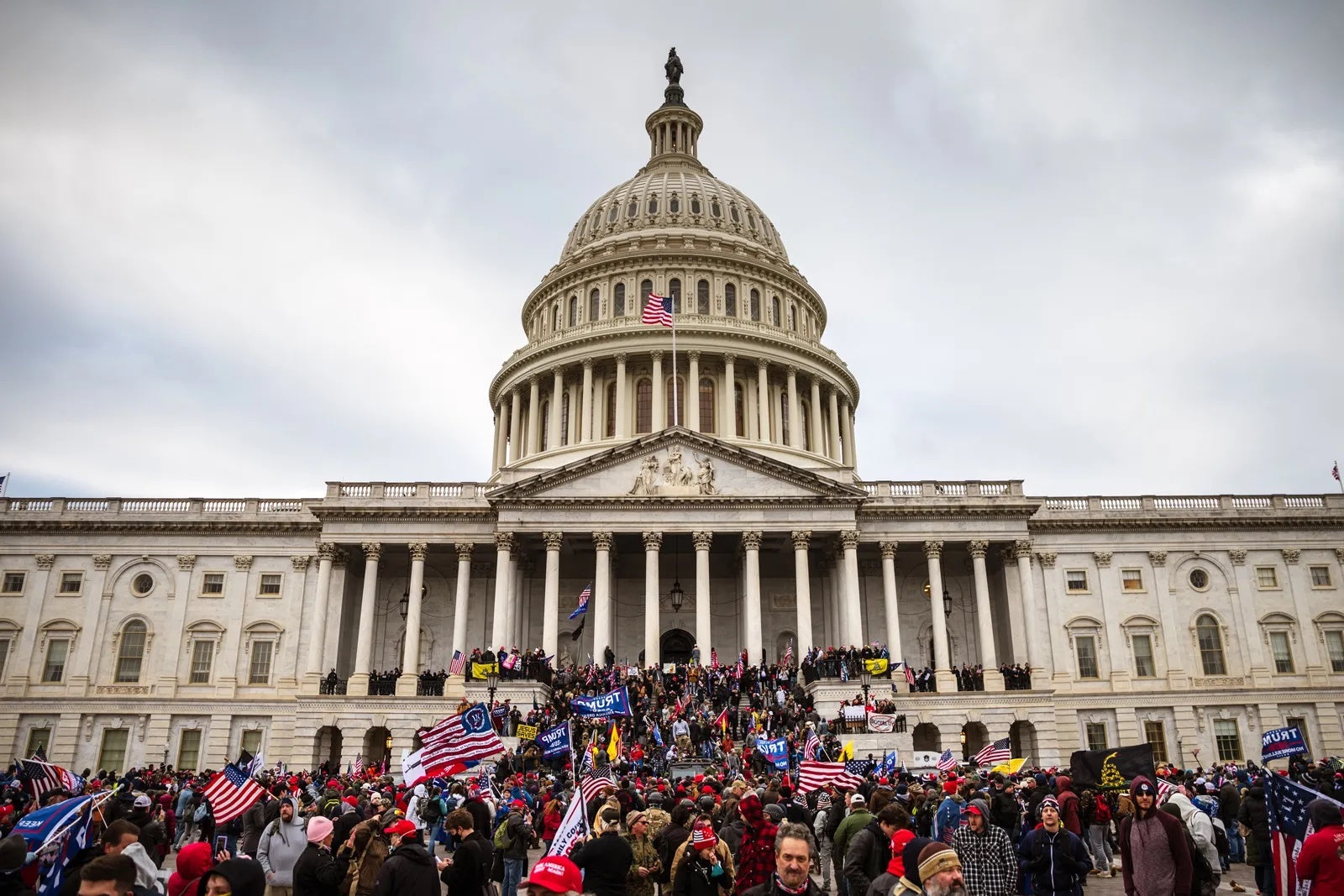
On March 14, the Department of Justice (DOJ) announced Larry Giberson ’23 was arrested in relation to the Capitol riot on Jan. 6, 2021. Giberson, a politics major from Manahawkin, N.J., was charged with civil disorder, a felony, and related misdemeanor offenses, according to a DOJ report.March 14, 20231 min read
On March 14, the Department of Justice (DOJ) announced Larry Giberson ’23 was arrested in relation to the Capitol riot on Jan. 6, 2021. Giberson, a politics major from Manahawkin, New Jersey...