


Suheyla Akman
'28
On October 28, Princeton Students gathered at the Carl A. Fields Center for a community dinner hosted by Princeton Students for Immigrant Empowerment (PSIE) and Princeton QuestBridge in recognition of National Immigrant Day. QuestBridge, a national non-profit organization that connects high-achieving low-income students with scholarships and educational opportunities at top U.S. colleges and universities, has partnered with Princeton since 2006. The event brought together different ethnic and international student organizations – including the Princeton Caribbean Connection, the Society of North African Princetonians, the Princeton Filipino community, the Princeton Latin American Student Association, the American Friends Service Committee, and the Asian American Students Association – for food, music, activities, and discussions around immigration. The event also included an educational game about immigration policy and student resources, as well as a discussion about access to higher education with Resistencia en Accion, a nonprofit migrant justice and community organization based in Princeton, New Jersey.
Immigration remains a pressing issue in the United States. Debates around border control, security, deportation, citizenship, and national identity are common in classes and campus discussions. However, these debates may overlook many individuals’ and families’ personal experiences. For some Princeton students, particularly those born and raised in the United States, immigration may be an issue solely discussed in the classroom or seen on the news. For others, it is closely related to family histories, identities, and experiences before and during Princeton.
According to Princeton’s 2023 enrollment data, international students represent approximately 23% of the total student population and 14% of the undergraduate population. More recently, international students make up 12.9% of the Class of 2030 and represent 63 countries. These statistics, however, are not the full number of students whose lives have been shaped by immigration.
Fatima Kawusu Sheriff, PSIE’s co-president, explained that PSIE supports all types of immigrant experiences, such as students who immigrated to the United States at a young age, those who arrived later in life, students born to immigrant families, and international students who immigrated for their education. However, experiences and challenges differ across citizenship and immigrant status. A U.S. citizen student born into an immigrant family may not experience what students on visas may have to consider: employment restrictions or uncertainty of re-entering the United States when traveling home during breaks, for example.
Fatima was born in Sierra Leone and immigrated to the United States at a young age and stated, “immigration has always been more than a political issue to me. Growing up with connections to two countries has shaped how I understand identity, opportunity, and the different experiences people bring with them. At Princeton, I’ve met students from across the world whose journeys are different from mine, and those conversations have reminded me how much we have to learn from one another. We spend so much time studying immigration through politics and policy, but I think it’s important to remember the individuals and families behind those discussions. We don’t always have to agree on immigration policy to recognize each other’s humanity. At the end of the day, we’re all Princeton students, but more importantly, we’re all human, and should listen to one another”
A member of PSIE who wished to stay anonymous explained: “I think it’s important to mention that not everyone has the privilege to speak up freely; some may be concerned about visas, legal vulnerabilities, and stigma.” For students whose ability to remain in the United States depends on their immigration status, participating in politically sensitive discussions may involve concerns that American students do not necessarily have to consider.
The student-run club PSIE, of which I am the secretary, helps ameliorate these issues by teaching students about immigration policy, coordinating opportunities for campus organizations to collaborate, and providing opportunities to participate in advocacy. PSIE supports undergraduate students from immigrant backgrounds through volunteer initiatives in collaboration with nonprofits and invites guest speakers, hosts fundraisers, workshops, and informational events.
PSIE board members shared their reasons for joining PSIE on the club’s official social media page. Luna Ramirez Castellanos, PSIE’s vice president, shared that the club understands the challenges of migration and values what immigrants contribute to their communities. She mentioned that Princeton’s international community helps her feel at home, even when she is far from her native country of Colombia. Alain Alarcon, a freshman board member who of Brazilian and Ecuadorian descent, mentioned the importance of empowerment and community growth, saying, “For me, I find the act of empowerment and empowering others extremely fulfilling. Through PSIE, I want to channel that into something meaningful for community growth.” While some people see immigration advocacy as only political, PSIE shows that it is also about education, service, building connections, and recognizing the cultures and perspectives immigrants bring.
The broad range of participating groups at the community dinner reflected the diverse student body that is united by shared concerns or experiences. Events and student associations like these also provide an environment that encourages free expression by bringing together students who may share similar backgrounds and understand each other. Such groups are essential to helping students feel they can bring their cultures and identities into conversation, as they may feel more comfortable discussing personal concerns about immigration knowing others may have faced similar challenges or can listen without judgment. In contrast, they may hesitate to share these experiences in alternative settings for fear of being misunderstood, judged, or having their opinions become political debates.
For the community dinner, PSIE created a game with immigration-related questions. The final prompt invited students to reflect on the issues affecting immigrant communities on campus, asking “Which issue affecting immigrant communities deserves more attention at Princeton?” Students could select answers related to mental health, a sense of belonging, visa and immigration concerns, discrimination and xenophobia, career opportunities, and education or advocacy. According to PSIE hosts, most students selected the second option related to visas, travel, and affordability.
Immigration policies may directly affect students’ education, financial circumstances, ability to travel, and sense of security. By asking students to identify which concerns deserve greater attention, PSIE encouraged participants to reflect on challenges they face but may feel anxious about discussing with a broader community that does not directly experience the same. The activity also revealed that creating space for free expression involves not only allowing students to speak, but also listening to what they believe deserves attention. PSIE’s goal is to create a space where all students can speak regardless of their citizenship, status, or cultural background. This means creating dialogue around trust, empathy, and a willingness to listen. Immigration is also an issue on which students may hold different perspectives. Supporting free expression does not mean students must agree on every question or political view; students should be able to both criticize policies as well as defend them.
Princeton has taken important steps to support students affected by immigration policies. At the Davis International Center, students are provided immigration advising, legal resources, and guidance on travel and employment. The University also extends its need-based financial aid to undocumented students and students with Deferred Action for Childhood Arrivals status. Princeton could continue building on these efforts by creating more opportunities for dialogue between students of different backgrounds and political perspectives, while ensuring students feel they can participate without consequences.
As Princeton students continue engaging in conversations about identity, inclusion, and speech, PSIE’s work reminds us that the mission of immigrant advocacy on campus is not to avoid disagreement, but to show what's possible when we create spaces essential to the freedom of speech that students of all backgrounds deserve.
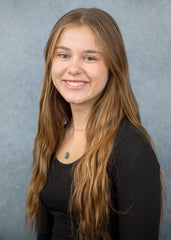
Suheyla Akman '28 is studying Public & International Affairs with a certificate in Entrepreneurship and Near Eastern Studies. On campus, she is active in Princeton Women in Entrepreneurship, the Princeton Club Equestrian Team, Blossom Together, Princeton Students for Immigrant Empowerment, and the Center for Career Development. Originally from Turkey, she is a PFS writing fellow.
Leave a comment
Comments will be approved before showing up.