
Nathaniel Cline
Virginia Mercury
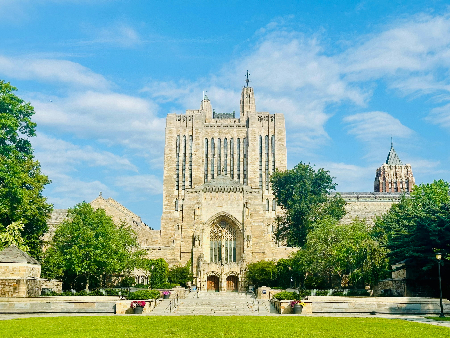
Virginia Tech governing board member John Rocovich has refused to resign after Gov. Abigail Spanberger removed him last week after 16 years. Rocovich stated in a four-page letter addressed to the Secretary of the Commonwealth that he will not resign before his term ends on June 30, 2027. There was no sign of him at the board’s committee meetings on Monday in Blacksburg.
Spanberger’s decision is the latest effort by her administration to shake up governing boards at Virginia’s colleges and universities, amid concerns within the higher education community about the politicization of public university governing bodies. She recently appointed four new members to Tech’s governing board.
Click here for link to full article
Comments will be approved before showing up.
I recently listened to Ross Douthat’s interview with the philosopher Jennifer Frey. She is a serious thinker and an unusually courageous academic entrepreneur. What she built at the University of Tulsa before it was dismantled is exactly the sort of thing more universities should be attempting. Yet almost every argument she offered for the humanities is, I think, completely unpersuasive to anyone not already on our side of the table.
This report presents findings from a national survey of 1,959 law school faculty at 192 American Bar Association (ABA) approved law schools in the United States, conducted by the Foundation for Individual Rights and Expression (FIRE). As one of the largest surveys of law faculty on free expression and professional norms, the data reveal a profession that strongly endorses free speech principles while struggling to live them out in practice.
I just returned from the University of Wyoming, where I debated the President of the American Association of University Professors (AAUP) Todd Wolfson over the need for colleges and universities to maintain institutional neutrality. The debate was organized by the Steamboat Institute and was live-streamed.
The formal question presented for debate was: “Is institutional neutrality necessary to preserve the university as a forum for open inquiry rather than an actor in political disputes?” I spoke in favor of institutional neutrality while Wolfson argued against it as a necessary component to higher education.