
Jonathan Turley
jonathanturley.org
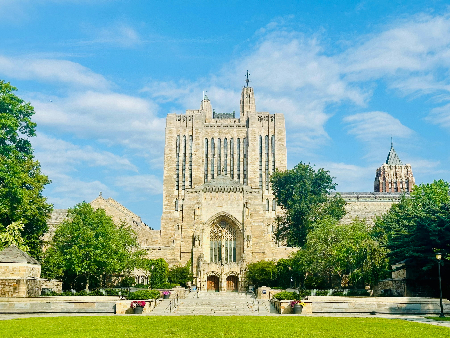
Yale University has finally achieved the academic version of Nirvana, a state of perfect peace and enlightenment. A recent study found that the faculty had finally purged every Republican donor from its ranks. While 98 percent of the political donations went to Democrats, not a single professor could be found who gave to a single Republican candidate. The complete lock for Democrats is in a country that is split evenly between Republicans and Democrats.
The Yale Daily News reviewed more than 7,000 Federal Election Commission filings from 2025 listing Yale as the employer: “Of 1,099 filings that included ‘professor’ in their occupation, 97.6 percent of the donations went to Democrats, while the remaining 2.4 percent went to independent candidates or groups,” the student newspaper reported Jan. 14.”
The study reinforces the recent Buckley Institute report, which found that, of the 43 departments surveyed, 27 entire departments contained zero Republican professors.
Comments will be approved before showing up.
The University of Chicago has undergone a “curriculum degradation” in the past 13 years, according to a new analysis by an accounting professor.
Professor Ivan Marinovic, who teaches accounting at Stanford University, analyzed language used in University of Chicago course titles and descriptions between 2012 and 2025 for his analysis, published at the Heterodox STEM Substack.
He found the use of “progressive” language, such as “equity” and “intersectional” has doubled, compared to the use of “Western canon” words, such as “Bible” and “Western civilization.”
From the outset, DEI at MIT was controversial even before it became a target of outside political scrutiny. Initial objections came not only from skeptics who opposed DEI as ideology or bureaucracy, but also from DEI supporters who believed it wasn’t enough. Some student activists and steering-committee members argued that the draft plan had been weakened by senior administrators. They criticized what they saw as closed-door changes, fear of upsetting faculty and donors, lack of transparency, and a plan that risked becoming “mostly performative” unless leadership accepted stronger, centralized standards.
The criticism from both directions showed that DEI at MIT was controversial before it became a target of outside political scrutiny. MIT’s DEI project was caught between competing criticisms: too ideological and bureaucratic for some, too weak and decentralized for others.
New York University’s Jonathan Haidt checks a number of boxes for an in-house commencement speaker: best-selling author, public intellectual, and high-profile campus figure. A social psychologist teaching “ethical leadership” at NYU’s school of business, his books like The Coddling of the American Mind and The Anxious Generation show up on airport bookshelves and the Obama end-of-year-list. He has been a fixture on the liberal-nerd podcast circuit and in the TED Talk world, best known for advocating for free speech and limited screen time. Despite that résumé — or because of it — some NYU students donning violet gowns today at Yankee Stadium would prefer it wasn’t Haidt delivering their final undergrad address.