



PFS Editorial
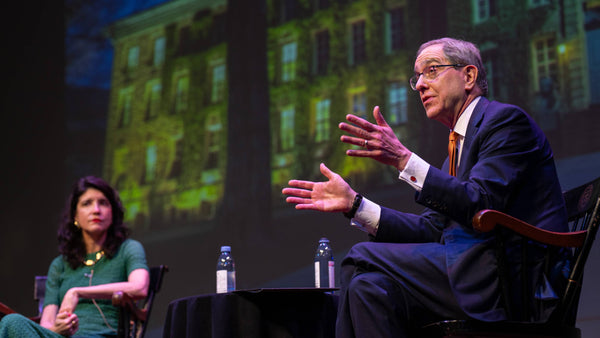
On April 15, 2026, Yale President Maurie McInnis announced, in an open letter to the Yale community, the issuance of a blockbuster fifty-page report by a special committee of ten Yale faculty that called for reform across many aspects of Yale’s policies and educational practices. The report dealt extensively with PFS’s core issues of free speech, academic freedom, and viewpoint diversity. But it also addressed other issues, such as affordability, admissions policies, political homogeneity, governance, grade inflation, the impact of technology on learning – all those issues that contribute to the decline in trust in higher education.
Importantly, Yale is publicly recognizing the need for change. The report’s cover letter from the faculty committee states: “We believe the issue of declining trust is real, urgent, and must be addressed.” President McInnis echoes this statement in her letter to the Yale community: “Today, universities nationwide are facing a historic wave of calls for change. Trust in institutions is waning, and that’s not a problem we can brush aside. For higher education to serve the public good, we need the public’s trust.”
PFS salutes President McInnis for her leadership in advocating for change. With the announcement of this report, McInnis immediately becomes a leader in the growing chorus of top university leaders across the country speaking out and implementing significant reforms.
Among those university leaders speaking out are the presidents of Dartmouth and Harvard. In a January opinion piece in the Wall Street Journal, “Is a Four-Year Degree Worth It?” Dartmouth President Sian Leah Beilock discussed the need for change and laid out specific areas for reform. She said:
American higher education has a trust problem. We shouldn’t pretend otherwise, and it won’t solve itself. In 2026 I’d like to see colleges and universities across the country take steps to restore trust.
At Harvard, President Alan Garber openly discusses the need for change, and according to the Harvard Crimson, Provost John F. Manning is leading a fundraising effort to aggressively move to broaden viewpoint diversity among faculty.
At the University of Texas at Austin, the Provost, William Inboden, has written about the loss of trust in higher education, including his influential article, “Restoring the Academic Social Contract.”
Johns Hopkins President Ron Daniels is in a multi-year collaboration with the American Enterprise Institute to increase faculty viewpoint diversity, notably through the Civic Thought Project. “Universities cannot hope to fulfill our truth-seeking mission unless our ideas are being tested and contested from within, among those whose perspectives, experiences, and thoughts broadly differ from one another.”
While resisting the Trump Administration’s attacks on American higher education, UCLA’s president Julio Frenk acknowledged the loss of public trust, saying that universities can no longer simply assert their value: “We need to earn back the trust of the public by demonstrating that we actually deliver that value.”
For the 10th anniversary of the Chicago Principles last year, President Alivisatos of University of Chicago said:
“We are in a crisis regarding free expression and academic freedom at universities. … [D]eference to conventional wisdom has stifled inquiry in a number of disciplines. Some quarters of higher education prize activism over inquiry. Important social questions go unaddressed because of fear of the answers. And errors persist because of fear of disagreeing with popular positions. This itself is an emergency.”
But real change requires that reform-minded leaders work in concert. Very importantly, Chancellors Daniel Diermeier of Vanderbilt and Andrew D. Martin of Washington University in St. Louis have for over two years been the most outspoken advocates for embracing change, emphasizing the loss of public trust in higher education. They have created “Universities for America’s Future” as an umbrella group for university leaders who want to discuss needed reforms and how best to implement them, and they have issued a joint Statement of Principles, adopted by the boards of both universities.
And where is Princeton at this critical time? Princeton is not only not embracing the need for reform, but Princeton President Eisgruber is generally seen as the leader of those who believe that advocating for reform is a mistake. In fact, a public dispute between Diermeier and Martin and Eisgruber was widely reported in the press. The argument from those in the Eisgruber camp seems to be that the perceived problems with universities are being exaggerated and that advocating for reform just plays into the hands of those in the Trump Administration who are attacking universities. In a recent talk on campus to promote his book Terms of Respect: How Colleges Get Free Speech Right, he said:
“The principal reason that American universities are being attacked is not because they have departed from their mission but because they are faithful to it, … They’re being attacked because they protect the independence and academic freedom of their students and scholars. They’re being attacked because they pursue ideas and theories unsettling or unwelcome to those in power. They’re being attacked because they have pushed hard to achieve a diverse, equal and inclusive society that the United States Constitution envisions and that justice requires. … We should take great pride in these universities, in these institutions that are at once marvelous and upsetting and we should defend them zealously.”
On this point, PFS believes that the Trump Administration has indeed overreached in its pressure campaign on universities. However, we also believe that the problems cited by reformers existed before the last presidential election and will continue to exist after Trump leaves the presidency. It is quite possible to defend universities against unwarranted attacks while still identifying real internal problems and the reforms needed to address them.
Standing up for the critical role of universities and educating the public about that role is of paramount importance, and President Eisgruber is to be commended for his leadership in that regard. However, defending institutional autonomy is not enough. It cannot be denied that the public has lost trust in higher education. There is too much evidence that this is the case. Nor can it be denied that universities, including Princeton, have lost sight of their core mission. It is difficult to argue that significant problems don’t exist -- for example, the many instances of antisemitism on campuses, the high levels of self-censorship amongst students, the well-documented administrative bloat outpacing student enrollment, the sharp decline in humanities and social sciences enrollment, the lack of transparency and merit-based standards in admissions and faculty hiring, and the many studies that show an extreme lack of viewpoint diversity among faculty cannot be denied.
To a degree, Princeton has fared better recently than some other leading universities – e.g., Harvard and Columbia. And Princeton can proudly point to the James Madison Program, which is now being replicated at universities across the country. However, Princeton has serious problems that are beyond the scope of this editorial to detail. To cite two clear examples: There are problems with antisemitism, and with high levels of student self-censorship, as shown in PFS’s student survey, Princeton’s Free Speech Campus Culture. See here for specific reform recommendations that PFS has made to the Princeton administration. The fact that last year the alumni giving participation rate fell to an eighty-year low should give Princeton’s leadership pause.
Other universities, including Princeton’s great rivals, Yale and Harvard, are publicly recognizing the need for change and undertaking programs to address that need. For Princeton, the first step would be to admit reform is needed. It is a real and pressing matter.

Article speaks of the “loss of public trust”. To me, the loss of alumni trust is even more urgent. Countless alumni in the center, center-right, and right have given up on Princeton as an institution of neutrality for the service of the nation and the world. Princeton, like so many other universities nationwide champion absolutely ludicrous positions. These institutions of higher learning are in an echo chamber together, soundproofed from reality.

Excellent editorial, Ed. Thanks for sending.
Comments will be approved before showing up.
Bill Noonan
April 30, 2026
Many once-prominent smaller colleges and universities across the United States have closed in recent years. Princeton considers itself immune to such a fate, but its ideological and academic sclerosis could lead to a less prominent position for Princeton in coming years. Only universities that reform themselves can reverse their undeniable loss of respect, but Princeton under its current President is doubling down on the path to academic ruin.