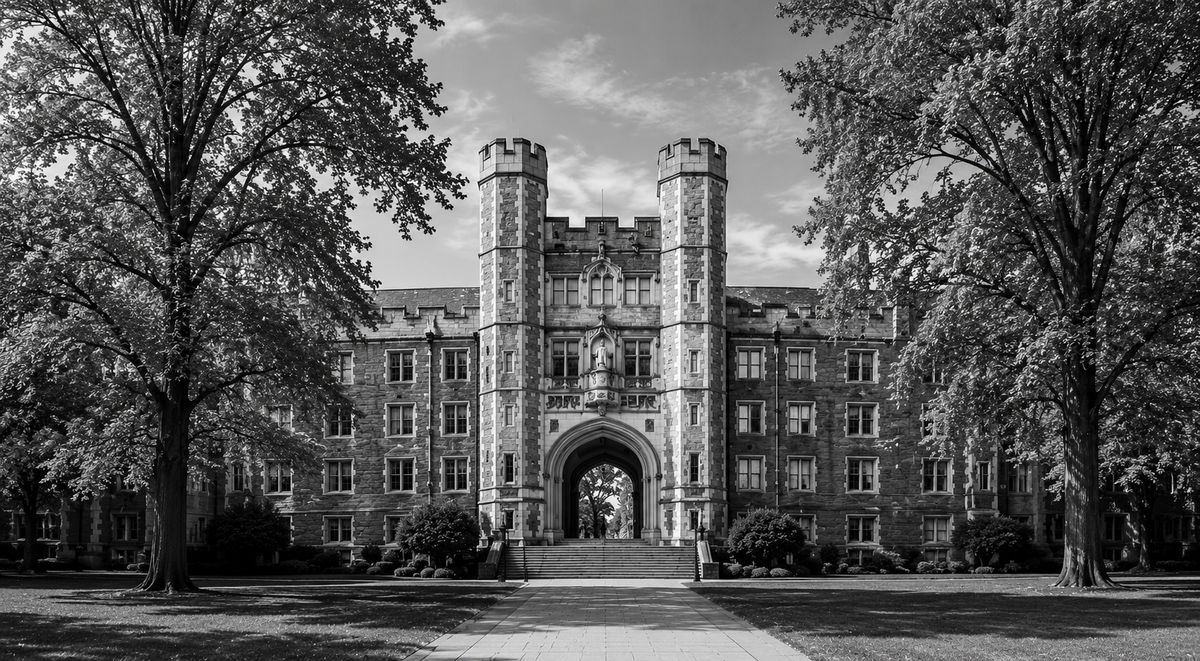
On April 11, 2025, the president of Yale, Maurie McInnis, convened a Committee on Trust in Higher Education. On April 10, 2026, the ten tenured faculty members on the committee submitted their report—unanimously. Detailed and running to fifty-six pages, it is a model of clarity.
There is much to admire in the report, and I will not stint on praise. But in addition to the appropriately strong words about many things that plague America’s colleges and universities, there is also a lack of strong words about other highly relevant things that Americans care and fight about. For example, the committee skirts around the dreaded trio of diversity, equity, and inclusion and does not mention the current U.S. president by name. I will have more to say on this subject, as well as on the need for the committee’s strong words to be followed by strong actions.
On April 10, 2026, a committee of 10 professors at Yale University published a report examining issues including the suppression of free speech. The Daily Princetonian published an article outlining perspectives from multiple Princeton professors on the report and its potential implications for Princeton. PFS released a related editorial, Yale issues a clarion call for change, joining other leading universities. Where is Princeton? PFS put Yale’s report in the context of the growing consensus amongst a widening circle who believe University leaders must take responsibility for their role in reaching this critical point. President Eisgruber is not among this list of reformers.
Princeton spent $240,000 on congressional lobbying in the first three months of the year, the second-highest spending total of any quarter in recorded history. The University’s Lobbying Disclosure Act filing shows lobbying efforts spanning issues including scientific research, financial aid, immigration issues, and the recently increased endowment tax.
The increased spending comes after the Trump administration cut hundreds of millions of dollars in federal grants to the University, investigated Ivy League institutions over allegations of antisemitism, and ended a program sponsoring active-duty service members in graduate studies.
There is a particular kind of bad idea that thrives under the protection of academic freedom. Such a toxic philosophy does not contribute to the marketplace of ideas. Rather, it gains prominence within the academy precisely because it systematically poisons that marketplace from within. When it comes under attack from outside university gates, campus administrators invoke free inquiry and end up defending it as precisely the kind of controversial matter academics must be free to explore; professors assign it as cutting-edge gospel; students come to think of it as precisely what they’re attending college to absorb.
Third Worldism is such an idea. Though it is not campus-grown like critical theory, it has found the American university to be an almost perfect habitat.
Jan-Werner Müller, renowned scholar of democratic theory and the history of political thought, was named Class of 1943 University Professor of Politics. Professor Müller is the founding director for the Academic Freedom Initiative and Forum for the History of Political Thought, which bring scholars together to examine academic freedom and the development of political ideas, respectively. Princeton endows 25 University professorships, which are the highest honor for faculty at the University.
In Princeton, we have access to opportunities that can enrich our experience of the anniversary. Walking our university’s campus every day makes it easy to take for granted the footsteps of greatness we follow. However, I believe that reflecting on Princeton’s role in the Revolution – the legacy of which surrounds us in the form of buildings, monuments, and documents – will help us gain a deeper appreciation of our history and lead us to recommit to the values we hold dear as Americans.