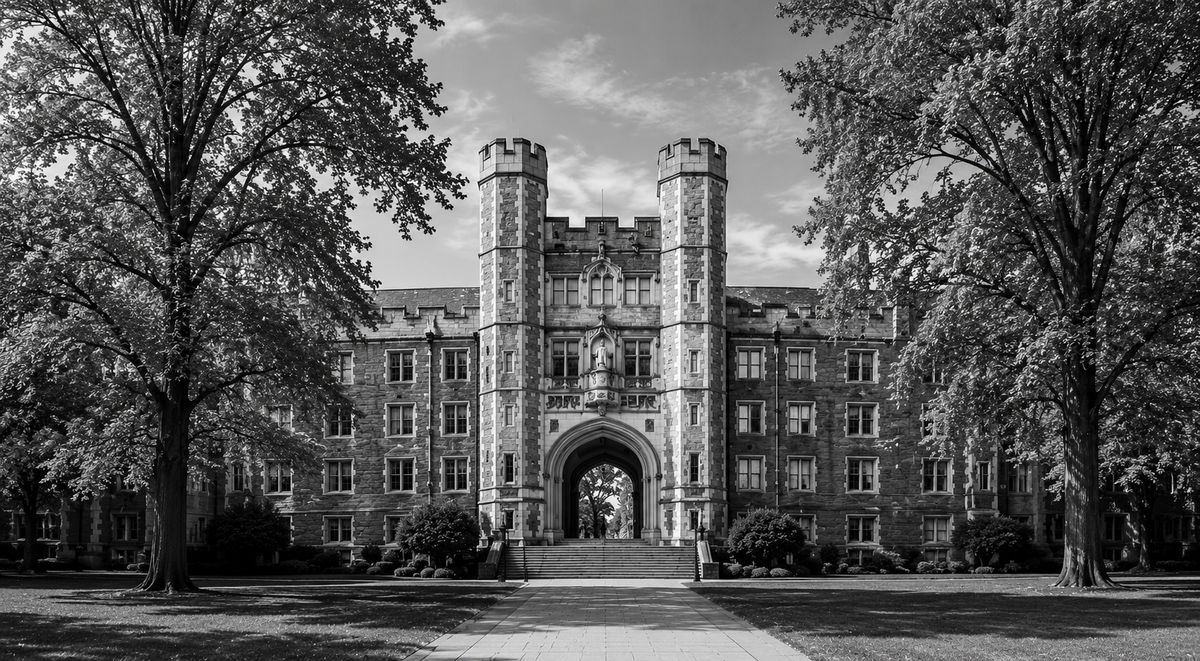
The University of Chicago has undergone a “curriculum degradation” in the past 13 years, according to a new analysis by an accounting professor.
Professor Ivan Marinovic, who teaches accounting at Stanford University, analyzed language used in University of Chicago course titles and descriptions between 2012 and 2025 for his analysis, published at the Heterodox STEM Substack.
He found the use of “progressive” language, such as “equity” and “intersectional” has doubled, compared to the use of “Western canon” words, such as “Bible” and “Western civilization.”
From the outset, DEI at MIT was controversial even before it became a target of outside political scrutiny. Initial objections came not only from skeptics who opposed DEI as ideology or bureaucracy, but also from DEI supporters who believed it wasn’t enough. Some student activists and steering-committee members argued that the draft plan had been weakened by senior administrators. They criticized what they saw as closed-door changes, fear of upsetting faculty and donors, lack of transparency, and a plan that risked becoming “mostly performative” unless leadership accepted stronger, centralized standards.
The criticism from both directions showed that DEI at MIT was controversial before it became a target of outside political scrutiny. MIT’s DEI project was caught between competing criticisms: too ideological and bureaucratic for some, too weak and decentralized for others.
The University of California Los Angeles (UCLA) School of Law is in the midst of a free-speech emergency. When a major American law school teaches its students that the right way to respond to political opponents is to silence them, something has gone wrong. And when it then attempts to protect those disruptive students from public criticism by threatening other students’ speech, it’s a crisis.
That’s just what happened at UCLA this past month.
The faculty, administrators, and trustees who establish graduation criteria at America’s most prominent colleges and universities have made a clear set of judgments about what every educated citizen should know. Their choices suggest that familiarity with diversity, equity, and inclusion (DEI) is more essential than an understanding of economics, American history, and the Constitution.
Berkeley has long been viewed as one of the most viewpoint-intolerant universities in the United States. Conservatives and those with opposing views are rarely invited and often face protests or cancellations. Some of us have long accused the Berkeley administrators and faculty of fostering this culture of intolerance. That culture was again on full display in the cancellation of an event with Jeffrey Dean, Chief Scientist at Google, in Jarvis Auditorium on Friday, May 1.
Roughly twenty masked protesters entered the event with the intention of preventing others from hearing from Dean and discussing these issues. Soon after the event began, they reportedly disrupted it with megaphones and yelling.
At the University of Michigan’s 2026 commencement exercises, history professor Derek Peterson stood before graduating seniors and their families and, as chair of the Faculty Senate, used his five minutes at the commencement microphone to praise pro-Palestinian campus activists for opening “our hearts to the injustice and inhumanity of Israel’s war in Gaza.”
I have no interest in adjudicating Peterson’s views on the war, his critics’ views, the regents’ threats, or the president’s clumsy attempt to thread the needle. The deeper problem sits one level up and it is this very simple idea: It is the recurring, almost compulsive instinct among faculty to treat every microphone, every syllabus, and every graduation stage as a venue for personal political witness and the bewildered surprise when the rest of the world responds.